
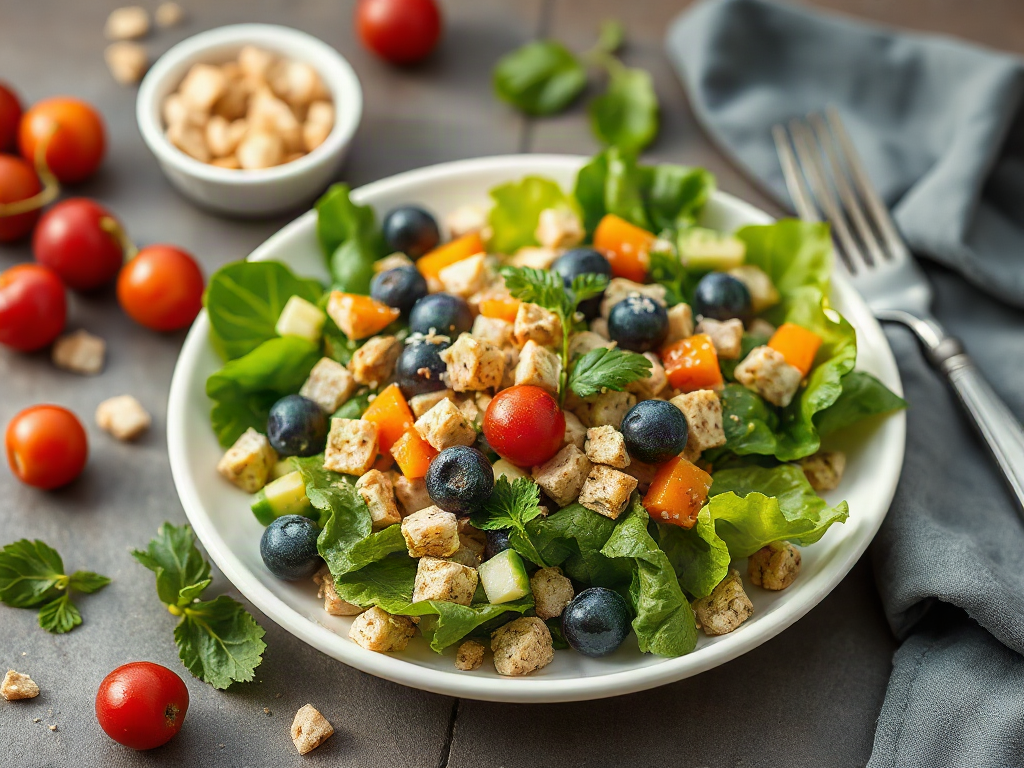
Nutrient-dense salads with balanced toppings combine varied vegetables with protein, satisfying fats, fiber-rich carbohydrates, and a flavorful dressing in amounts suited to the meal. A useful build includes dark leafy greens, colorful produce, beans, eggs, fish, poultry, tofu, nuts, seeds, or whole grains rather than relying on lettuce alone. Protein and fiber make the salad more substantial, while fat helps the body use fat-soluble nutrients and carries flavor. Large amounts of cheese, fried toppings, sweetened dried fruit, or dressing can crowd out produce without improving balance. Adjust the composition for a light side, a complete lunch, or higher energy needs.
What Makes a Salad Nutrient-Dense and Balanced
A salad becomes nutritionally substantial when its components supply more than volume and crunch. Leafy greens contribute folate, vitamin K, carotenoids, and other compounds, but a bowl built only from greens, cucumber, and a few tomatoes is usually closer to a vegetable side than a complete meal. A main-dish salad also needs a meaningful protein source, an energy source, and enough fat to carry flavor and make the bowl satisfying.
Variety matters because no single green or topping covers every nutritional role. Spinach and kale provide a different nutrient profile from romaine or cabbage; red peppers add vitamin C, while carrots and winter squash contribute carotenoids. Beans supply fiber, protein, folate, and minerals. Eggs, fish, poultry, tofu, tempeh, or plain dairy can raise protein without requiring an oversized serving of cheese. Nuts, seeds, avocado, and olive-oil dressing contribute unsaturated fats, although their concentrated energy makes deliberate amounts more useful than unmeasured handfuls.
Balance depends partly on the purpose of the salad. A side salad accompanying lentil soup does not need to contain every macronutrient because the rest of the meal supplies them. A salad expected to carry someone through an afternoon needs more structure. For example, romaine, tomatoes, cucumber, and vinaigrette may feel abundant when served in a large bowl, yet still provide little protein or sustained energy. Adding chickpeas, cooked farro, pumpkin seeds, and roasted peppers changes both its nutritional range and staying power.
Nutrient density should not be confused with making every topping as light as possible. Removing all fat can reduce satisfaction and make vegetables less appealing, while avoiding carbohydrate-rich additions may leave an active person hungry soon after eating. Conversely, calling every seed, cheese, or dried fruit a “superfood” does not make unlimited quantities balanced. The useful question is what job each ingredient performs.
A practical review of Nutrient-dense salads with balanced toppings asks four questions: Is there enough produce variety? Is there a clear protein source? Does the bowl include an appropriate amount of carbohydrate and fat? Does the dressing enhance the vegetables without dominating them? If one role is missing, correct that gap before adding more decorative garnishes.
A Reliable Method for Choosing Toppings
Choose toppings by function rather than by piling on every ingredient that sounds nutritious. Begin with two or more vegetable types beyond the leafy base, then select one primary protein, one source of texture or carbohydrate, and one measured source of fat. This method produces contrast without turning the salad into an expensive collection of small extras.
The vegetable layer benefits from mixing raw and cooked produce. Raw cabbage, radishes, snap peas, or peppers add crispness, while roasted broccoli, mushrooms, beets, or squash make the bowl feel more substantial. Frozen vegetables can work after cooking and cooling, and canned options such as artichoke hearts or corn are convenient when drained. People sensitive to large amounts of raw vegetables may find lightly cooked vegetables easier to tolerate than an enormous base of tough greens.
Protein deserves special attention in a main-dish salad because scattered nuts or a light dusting of cheese may not provide as much as the bowl appears to contain. Choose a recognizable anchor such as lentils, white beans, baked tofu, eggs, canned salmon, chicken, or Greek-style yogurt used in a dressing. Plant proteins can do double duty: lentils and beans contribute protein plus fiber-rich carbohydrate, while tofu supplies protein with a relatively neutral flavor.
Use the following sequence as a compact building checklist:
- Build the produce base: combine greens or shredded vegetables with at least two colors or textures.
- Anchor it with protein: add beans, lentils, tofu, eggs, fish, poultry, or another substantial choice.
- Add useful energy: include quinoa, barley, brown rice, corn, potatoes, fruit, or whole-grain bread when the salad is the meal.
- Finish with fat and flavor: use nuts, seeds, avocado, cheese, or an oil-based dressing in an intentional amount.
- Check contrast: balance crisp, tender, acidic, savory, and fresh elements without adding toppings solely for decoration.
Dressing is part of the composition, not an afterthought. Olive oil with lemon or vinegar is versatile, while tahini, yogurt, herbs, mustard, or blended beans can add body and flavor. Bottled dressing is also workable; the label can help identify sodium, added sugars, and serving size. The common failure is either flooding the bowl or using so little dressing that nutritious vegetables remain unappealing. Toss a small amount thoroughly first, taste, and add more only if needed.
For a concrete combination, pair shredded kale and cabbage with roasted sweet potato, black beans, pumpkin seeds, cilantro, and lime-tahini dressing. It covers produce, protein, fiber-rich carbohydrate, and fat while retaining clear flavors. By contrast, kale topped with avocado, walnuts, cheese, seeds, and a generous oil dressing contains nutritious ingredients but concentrates several fat sources while leaving protein uncertain. Better balance often comes from substitution, not addition.
How to Match the Salad to the Meal
The right composition changes with appetite, activity, budget, and what else is being served. Treating every salad as a weight-control dish can produce a meal that looks large but is poorly matched to the eater. A person preparing a desk lunch, an athlete eating after training, and someone serving a salad beside a bean stew need different amounts and combinations.
For a complete lunch, emphasize protein and a fiber-rich energy source. A bowl of arugula, tomatoes, cucumbers, lentils, cooked barley, feta, and lemon dressing has more staying power than vegetables with fat-free dressing. Someone with higher energy needs could increase the barley, add whole-grain bread, or include more olive oil. Someone wanting a lighter accompaniment could keep the vegetables and dressing but serve a smaller portion without forcing the side salad to function as the entire meal.
Budget-friendly salads rely on sturdy produce and repeatable staples. Cabbage, carrots, seasonal greens, canned beans, eggs, sunflower seeds, and home-cooked grains generally stretch across several servings. Premium microgreens, specialty cheeses, prepared proteins, and numerous small topping packages can increase cost without creating a more balanced bowl. Preparing one grain, one protein, and one dressing for several days reduces both expense and assembly time. Keep wet ingredients separate until serving to protect texture.
Food preferences and tolerance also shape the best approach. Plant-based bowls can combine legumes or soy foods with grains, seeds, and varied vegetables. People who dislike legumes might use eggs, fish, poultry, or dairy, depending on their eating pattern. Those increasing fiber should do so gradually and drink adequate fluids; suddenly combining a very large raw vegetable base with beans, whole grains, and seeds may cause digestive discomfort. Cooking vegetables, using a smaller portion of beans, or rotating in tofu can make the transition more manageable.
Texture and temperature are practical signs that the design is working. A satisfying salad usually contains a tender element, something crisp, enough moisture, and seasoning distributed through the bowl. If the last third remains untouched, the greens are dry, or hunger returns unusually quickly, inspect the construction rather than assuming salads are inherently unsatisfying. The bowl may need more dressing, a clearer protein anchor, a warm component, or a carbohydrate source.
Meal preparation also requires food-safety judgment. Cool cooked grains and proteins promptly, refrigerate perishable components, and avoid leaving salads containing meat, fish, eggs, dairy, or cooked foods at room temperature for extended periods. Store dressing separately when possible. Additional combinations in Nutrient-dense salads with balanced toppings can be adapted, but freshness, safe storage, and personal dietary needs should take priority over a fixed recipe.
Common Imbalances and Practical Corrections
Most disappointing salads fail through imbalance rather than through one forbidden ingredient. Too little protein, excessive reliance on concentrated toppings, monotonous texture, or mismatched portion size can make a nutritious-looking bowl either unsatisfying or heavier than intended. Correcting the dominant problem is more effective than labeling particular toppings as universally good or bad.
A frequent mistake is counting garnish as protein. A spoonful of seeds, a few cheese crumbles, or a small amount of hummus contributes nutrients, but it may not perform the same role as a substantial serving of beans, tofu, eggs, fish, or poultry. If a salad is meant to be the meal, make the protein visible and central. If it is a side, a modest garnish may be entirely appropriate.
Another imbalance comes from stacking multiple concentrated additions: candied nuts, dried cranberries, cheese, bacon, croutons, avocado, and a sweet dressing can collectively overshadow the vegetables. None must be banned, but using all of them at once makes portions hard to judge. Select one or two accents that matter most. Plain toasted nuts can replace candied nuts, fresh fruit can replace some dried fruit, or herbs and pickled onions can add intensity with less reliance on rich toppings.
Low-fat construction can fail in the opposite direction. Bare vegetables with vinegar may satisfy someone seeking a crisp side, but a meal salad usually benefits from fat for flavor, texture, and the use of fat-soluble carotenoids and vitamins. A vinaigrette, tahini sauce, avocado, nuts, or seeds can fill that role. More is not automatically better; if avocado, nuts, cheese, and oil are already present, increasing all four rarely solves a dry or bland bowl. Better tossing, acidity, salt, herbs, or a splash of water in a thick dressing may be the needed fix.
Watch sodium when several prepared ingredients converge. Cured meats, cheese, olives, pickled vegetables, canned beans, and bottled dressing may each fit individually, but together they can create a very salty result. Rinsing canned beans, choosing either olives or cheese, and using citrus and herbs for contrast can preserve flavor. People following clinician-directed limits for sodium, potassium, vitamin K, or other nutrients should tailor salads to that advice rather than assuming a vegetable-heavy dish automatically fits a medical diet.
A working bowl should taste coherent, meet the role assigned to it, and leave the eater comfortably satisfied. A failing one is routinely abandoned, causes a quick search for another meal, or depends on so many toppings that preparation becomes impractical. Use Nutrient-dense salads with balanced toppings as a flexible composition principle: preserve produce variety, establish the missing nutritional role, and simplify anything that does not improve flavor, texture, or function.
Frequently Asked Questions
What toppings make a salad a complete meal?
Use a substantial protein such as beans, tofu, eggs, fish, or poultry, then add varied vegetables, a fiber-rich carbohydrate when needed, and a moderate source of fat. The exact amounts should reflect appetite, activity, and whether other dishes are served.
Are nuts and seeds enough protein for a main-dish salad?
They contribute protein, minerals, texture, and unsaturated fat, but a small sprinkle is usually better treated as an accent. Pair them with beans, lentils, tofu, eggs, fish, poultry, or another clear protein anchor.
Can salad dressing be part of a nutrient-dense salad?
Yes. Dressing improves flavor and can supply useful fat, but quantity and composition matter. Toss a modest amount thoroughly, then adjust after tasting instead of pouring heavily before mixing.
How can a prepared salad stay crisp?
Dry washed greens, cool cooked components before packing, and store dressing separately. Place sturdy vegetables and grains below delicate leaves, then combine the ingredients shortly before eating.
Why am I still hungry after eating a large salad?
Volume alone may not provide enough protein or energy. Check whether the bowl contains a substantial protein, an appropriate carbohydrate source, and some fat rather than only raw vegetables and a light dressing.
Further Reading
Authoritative Sources
- USDA MyPlate
myplate.govUSDA guidance provides a practical reference for balancing vegetables, protein, grains, fruit, and dairy across a meal
- Dietary Guidelines for Americans
dietaryguidelines.govThe federal dietary guidance explains broader eating patterns, nutrient-dense choices, and limits relevant to salad ingredients
- How to Understand and Use the Nutrition Facts Label
fda.govFDA label guidance helps readers compare dressings and prepared toppings for serving size, sodium, added sugars, and nutrients
- Four Steps to Food Safety
foodsafety.govFederal food-safety guidance covers cleaning, separation, cooking, and chilling for salads containing perishable components
Conclusion
A useful salad has a defined role: vegetable side, light snack, or complete meal. Once that role is clear, build with varied produce and correct the most important nutritional gap—usually protein, useful energy, or fat—before adding decorative extras. Contrast raw vegetables with cooked components, use dressing deliberately, and choose only the rich accents that noticeably improve the bowl.
For the next salad, inspect what is already present rather than reaching for more toppings. Add beans, tofu, eggs, fish, or poultry if protein is weak; include grains, potatoes, corn, fruit, or bread when the meal lacks energy; and simplify overlapping cheese, nuts, seeds, avocado, and oily dressing. A balanced result should be enjoyable to finish, practical to prepare, and appropriate for personal needs rather than built around a rigid formula.
Related Content
- How to Avoid Over-Reliance on Superfoods: Practical Steps and Common Misconceptions
- Do Superfoods Actually Help With Weight Management: Evaluating Their Role and Effectiveness
- How To Find Superfoods That Help With Recovery: Nutrients, Meal Timing, And Real-World Choices
- Low-Phosphorus Foods for Everyday Meal Planning: A Practical Grocery and Plate-Building Approach
- Difference Between Superfoods and Whole Food Nutrition Benefits: Key Factors and Real-World Impacts