
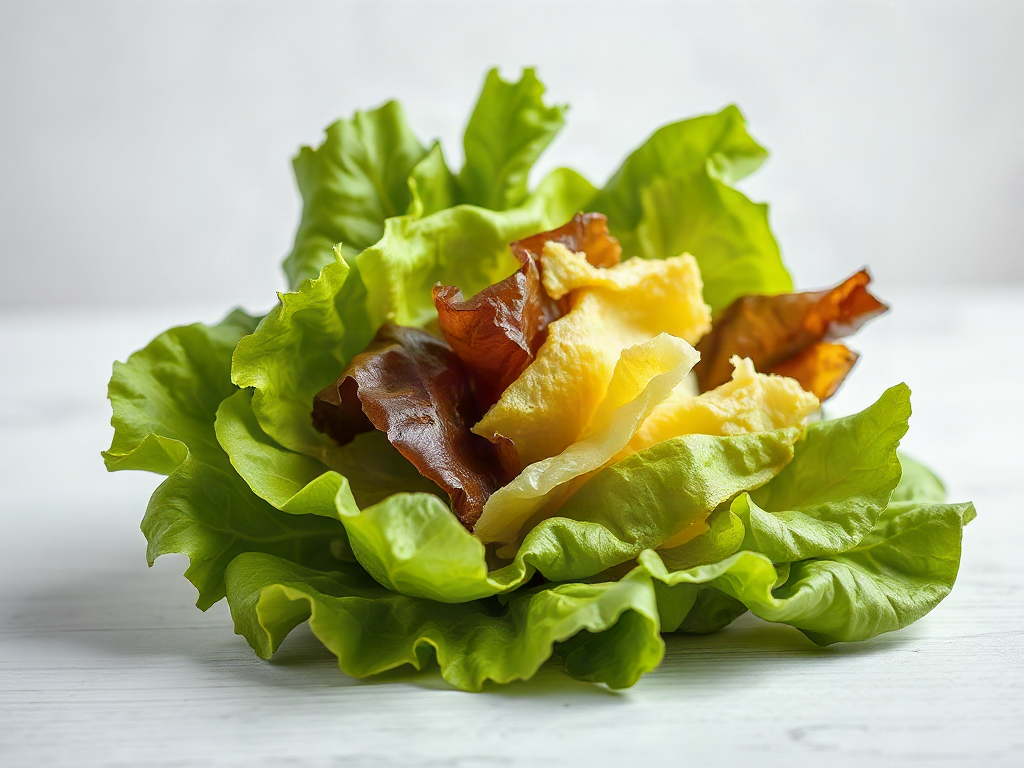
Lettuce nutrition varies by type and serving size, with darker varieties generally supplying more vitamin A, vitamin K, and folate than iceberg while remaining low in calories. A loose cup may weigh roughly 25 to 75 grams depending on the variety, leaf shape, and whether it is chopped or packed, so cup-based comparisons can be misleading. Romaine, green leaf, red leaf, and butterhead usually offer greater micronutrient density, whereas iceberg contributes more crunch and water. Compare varieties per 100 grams for consistency, then use the actual gram weight of your salad portion to estimate intake more accurately.
How Do Lettuce Types Compare Nutritionally?
The largest nutritional differences among lettuce varieties appear in their micronutrients, not their calories. Nearly all fresh lettuces provide substantial water and relatively little energy, protein, fat, or carbohydrate. Darker green and red leaves tend to contain more carotenoids and vitamin K, while romaine is particularly notable for folate. Iceberg is less concentrated in many of these nutrients, but it still contributes water, small amounts of fiber, and useful volume.
Comparing lettuce by weight gives a clearer picture than comparing one leaf or one loosely filled cup. Based on entries in USDA FoodData Central, raw lettuce generally falls within a narrow range of roughly 13 to 17 calories per 100 grams. The same weight can differ considerably in vitamin A, vitamin K, and folate because pigments, leaf maturity, and plant structure vary by cultivar.
| Lettuce type | Approximate calories per 100 g | Notable nutritional features | Typical culinary use |
|---|---|---|---|
| Iceberg | 14 | High water content; modest fiber, folate, and vitamin K | Crunchy salads, sandwiches, lettuce cups |
| Romaine | 17 | Folate, beta-carotene, vitamin K, and more fiber than some loose-leaf types | Chopped salads, grilled halves, wraps |
| Butterhead | 13 | Vitamin K, folate, and carotenoids in tender leaves | Delicate salads and flexible wraps |
| Green leaf | 15 | Beta-carotene and vitamin K with a soft texture | Salads, sandwiches, bowls |
| Red leaf | 13 | Vitamin K, carotenoids, and red-purple plant pigments | Mixed salads and colorful garnishes |
These figures are reference values rather than guarantees for every head of lettuce. Cultivar, growing conditions, storage time, and the exact parts tested can affect laboratory results. A nutrition database may also distinguish between whole leaves, shredded lettuce, inner leaves, and outer leaves. Checking that the database entry matches the food actually eaten is more useful than treating a single number as universal.
A common mistake is dismissing iceberg as nutritionally worthless or treating all dark lettuce as interchangeable. Iceberg can be a practical choice when crisp texture encourages someone to eat a larger salad, but it should not be assumed to match romaine or leaf lettuce for micronutrient density. Mixing iceberg with romaine or red leaf preserves crunch while broadening the nutrient profile.
How Does Serving Size Change Lettuce Nutrition?
A cup of lettuce is not a fixed nutritional unit because different leaves occupy space differently. A cup of finely shredded iceberg can weigh considerably more than a cup of loosely placed red leaf. Chopping, packing, rib thickness, and moisture loss all change how much lettuce fits into the measure, even before differences among varieties are considered.
For everyday tracking, weighing the edible portion is the most consistent method. Place a bowl on a kitchen scale, tare it to zero, add the lettuce, and record the gram weight before dressing or toppings are added. Use the matching raw lettuce entry in a reputable nutrient database. This approach separates the lettuce from calorie-dense additions such as oil, cheese, nuts, seeds, croutons, or creamy dressing.
| Portion description | Practical weight range | How to interpret it |
|---|---|---|
| 1 loose cup | About 25–40 g | Typical of light, loosely arranged leaf lettuce |
| 1 fuller or shredded cup | About 45–75 g | More likely with chopped romaine or shredded iceberg |
| 2-cup salad base | About 50–150 g | Wide range caused by leaf type, cut, and packing |
| Standard comparison portion | 100 g | Best for comparing varieties on equal terms |
The ranges are intentionally broad because cup measures cannot capture every preparation style. If a package provides a serving in both cups and grams, the gram figure is the more reproducible reference. For unpackaged lettuce, a scale resolves uncertainty within seconds. Without a scale, describe the portion honestly as loose, moderately packed, or densely shredded instead of assuming every cup equals the same weight.
Serving size changes nutrients proportionally. Fifty grams provides about half the calories, fiber, and listed micronutrients shown for 100 grams; 150 grams provides roughly one and a half times those values. That calculation is useful for plain lettuce, but prepared salads require separate entries for each ingredient. A large bowl of leaves may remain low in calories, while two tablespoons of oil-based dressing can contribute more energy than the entire lettuce portion.
The failure sign is an estimate that seems inconsistent with the physical meal—for example, logging a densely packed bowl as a single loose cup. The correction is to measure once or twice with the bowl normally used. That creates a realistic household reference without requiring every future salad to be weighed.
Which Lettuce Fits Different Nutrient Goals?
Romaine and darker leaf lettuces are usually the strongest choices when micronutrient density is the priority. Their deeper color reflects higher concentrations of plant pigments, including beta-carotene, which the body can convert to vitamin A. Several dark varieties also supply substantial vitamin K, while romaine contributes more folate than iceberg in standard database comparisons.
Texture and intended use still matter. Romaine ribs stay crisp under heavier toppings and dressings, making the variety useful for meal-sized salads. Butterhead leaves are tender and flexible enough for wraps but may wilt under warm ingredients. Green leaf and red leaf add volume and color to mixed bowls, while iceberg handles chopped salads and sandwiches where crunch is more valuable than delicate flavor.
A practical selection checklist is:
- Prioritize the nutrient: Choose romaine or dark leaf lettuce when folate, vitamin A precursors, or vitamin K is a central goal.
- Match the texture: Use iceberg for crispness, butterhead for flexible cups, and romaine for sturdy salads.
- Check the portion: Compare equal gram weights rather than assuming equal cup measures.
- Add variety: Combine two lettuces when one variety does not provide the preferred texture and nutrient profile.
Vitamin K deserves context for people taking warfarin or another medication whose effect can be influenced by vitamin K intake. Abruptly moving from little leafy lettuce to large daily portions may change intake substantially. The usual concern is consistency rather than avoiding all greens, but medication-specific decisions belong with the prescribing clinician or a registered dietitian familiar with the treatment plan.
Lettuce should not be treated as a concentrated source of protein, iron, or dietary energy. Even a generous serving contributes little protein compared with beans, lentils, eggs, fish, poultry, tofu, or yogurt. Someone choosing lettuce specifically to correct a nutrient deficiency is making a weak assumption: varieties can complement a balanced diet, but they are not treatments and may not provide enough of the nutrient in question.
Signs that the choice is working are practical. The leaves hold up in the intended dish, the portion is satisfying when paired with substantial ingredients, and the variety is eaten regularly rather than discarded. Repeated wilting, uneaten bitter leaves, or reliance on heavy dressing suggests that another type—or a smaller package—would fit better.

How Can Lettuce Become a More Substantial Meal?
Lettuce provides volume and micronutrients, but a meal built from leaves alone is unlikely to be filling for long. Its high water content and low energy density explain why a large visual portion may contain little protein, fat, or carbohydrate. A substantial salad therefore needs other whole-food components rather than simply a larger mound of lettuce.
Start with roughly two generous handfuls of washed lettuce, then add a protein source. Chickpeas, lentils, edamame, tofu, eggs, chicken, tuna, or salmon can make the dish more nutritionally complete. Add a carbohydrate when the meal needs more staying power: beans, quinoa, brown rice, corn, roasted sweet potato, or a slice of whole-grain bread are practical options. Nuts, seeds, avocado, or an oil-based dressing contribute fat and flavor, although portions matter because these foods are energy-dense.
For example, romaine with chickpeas, tomato, cucumber, pumpkin seeds, and a lemon-tahini dressing functions differently from plain romaine with fat-free dressing. The first bowl includes protein, carbohydrate, and fat alongside the lettuce. The second may be appropriate as a side salad, but calling it a complete lunch can lead to hunger soon afterward.
Preparation affects usability more than it changes the fundamental nutrient ranking. Wash leaves under cool running water, remove damaged areas, and dry them thoroughly so dressing adheres instead of pooling. Store clean, dry lettuce cold with excess moisture controlled; slimy texture, strong off-odors, and extensive decay are signs to discard it. Cutting lettuce does not make it nutritionally empty, although prolonged storage after cutting can reduce quality.
The most common meal-building error is focusing on lettuce calories while ignoring toppings. Dressing need not be avoided, but it should be counted as part of the meal rather than part of the vegetable. A measured spoonful may be enough to coat well-dried leaves. Conversely, using so little food that the salad fails to satisfy can prompt unplanned snacking later. The better target is a balanced plate in which lettuce supplies freshness, volume, and selected micronutrients while other foods cover protein and energy needs.
Conclusion
Use grams when accurate comparison matters, because leaf shape and packing can make equal cup measures represent very different amounts. Romaine, butterhead, green leaf, and red leaf generally provide a denser mix of vitamins than iceberg, while iceberg remains useful for hydration, volume, and crisp texture. The best practical choice is often a mixture that fits the dish and is likely to be eaten before it spoils.
For a meal-sized salad, treat lettuce as the base rather than the entire meal. Add a meaningful protein source, a suitable carbohydrate, and a measured amount of fat or dressing. Check package labels or USDA data using the closest matching raw variety, and pay attention to vitamin K consistency if relevant to prescribed medication. Those steps produce a more realistic nutritional estimate than relying on a generic “one cup of lettuce” entry.
Frequently Asked Questions
Which lettuce is the most nutritious?
Romaine and dark green or red leaf lettuces generally provide more vitamin A precursors, vitamin K, and other micronutrients than iceberg. No single variety is best for every use, so texture, portion size, freshness, and the rest of the meal also matter.
How many calories are in a cup of lettuce?
A cup commonly contains roughly 5 to 12 calories, but the total varies with the lettuce type, cut, and packing density. A gram weight matched to a reliable database entry gives a better estimate than volume alone.
Is iceberg lettuce nutritionally useful?
Yes. Iceberg supplies water, volume, some fiber, and small amounts of several vitamins and minerals. It is less micronutrient-dense than many darker lettuces, but combining it with romaine or leaf lettuce retains its crisp texture while improving variety.
Does chopping lettuce reduce its nutrients?
Chopping does not immediately remove most nutrients, although cut leaves deteriorate faster during storage. Chop close to serving time when practical, keep the lettuce refrigerated, and discard leaves that become slimy, badly decayed, or foul-smelling.
Should lettuce be measured before or after adding dressing?
Measure lettuce before adding dressing if accurate tracking is the goal. Record dressing, cheese, nuts, seeds, protein, and other toppings separately because they can contribute far more calories and macronutrients than the leaves.