
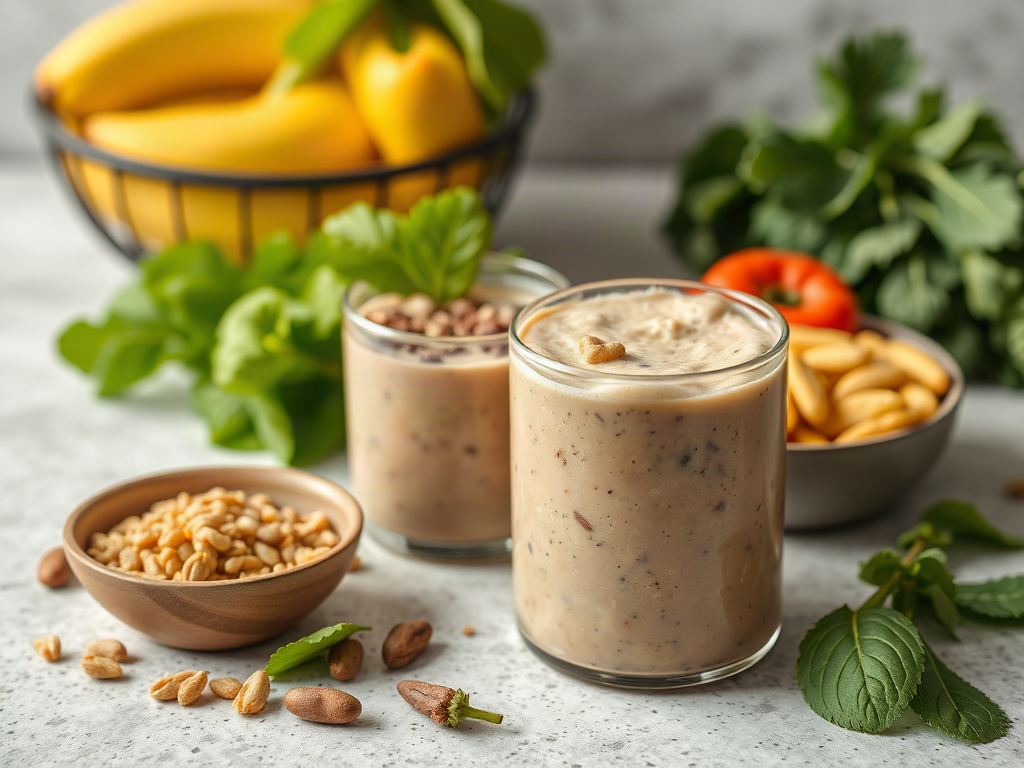
Plant-based meal replacement nutrition compared with whole-food meals shows a tradeoff between convenience and nutritional completeness: powders and ready-to-drink options can provide useful protein, fiber, vitamins, and minerals, but their quality varies with formulation and portion size. Pea, soy, or blended proteins may support satiety more reliably than low-protein products, while added fiber can improve fullness but may cause bloating when increased quickly. Whole foods generally offer more varied textures and naturally occurring nutrients, whereas a fortified replacement may be practical during travel or a rushed morning. Check protein, fiber, added sugar, micronutrient fortification, allergens, and serving calories before choosing one, and avoid treating a replacement as automatically equivalent to a balanced meal.
What Plant-Based Meal Replacements Actually Provide
Plant-based meal replacements are formulated drinks, powders, bars, or blended products designed to stand in for some of the calories and nutrients normally supplied by a meal. Their nutritional value depends less on the word “plant-based” than on the ingredients, fortification, serving size, and what the product leaves out. A shake made mainly from pea protein and oat flour is nutritionally different from a sweetened drink containing a small amount of protein and several added vitamins.
Most products combine a plant protein such as pea, soy, rice, hemp, or a blend with carbohydrate ingredients, fats, flavorings, and added vitamins or minerals. Some include oats, flax, chia, inulin, or other fibers. Others contain little fiber and function more like protein drinks than meal replacements. Reading the Nutrition Facts panel alongside the ingredient list gives a clearer picture than relying on front-label claims.
A useful first question is whether the serving supplies enough energy for the situation. A small shake may work as a snack but leave someone hungry when used as breakfast. Conversely, a large serving with substantial added sugar may provide calories without the volume, chewing, and food variety of a conventional meal. The product should match the intended role rather than being judged as universally good or bad.
For example, someone commuting early may use a fortified soy-and-oat shake with fruit, while someone eating lunch at home may gain more satisfaction from lentils, brown rice, vegetables, and tahini. The first option offers speed and predictable portions; the second offers texture, broader food variety, and easier customization. Neither comparison is meaningful without considering the rest of the day.
Common mistakes include treating “vegan” or “organic” as proof of nutritional balance and assuming every powdered drink contains enough iron, calcium, vitamin B12, or iodine. These nutrients may be present, absent, or supplied in different amounts depending on the formula. Use Plant-based meal replacement nutrition compared as a label-reading question, not a marketing shortcut.
Protein, Fiber, And Micronutrient Differences
Protein quality and quantity are central when comparing plant-based replacements. Pea and soy proteins are commonly used because they provide substantial protein, while rice, hemp, and other sources may be blended to improve the amino acid profile or texture. A product with modest protein may be unsuitable as a meal substitute for someone who expects it to provide lasting fullness, especially if the drink is also low in fiber and fat.
Protein does not work alone. Fiber slows eating and digestion, contributes bulk, and may make a liquid meal more satisfying when paired with adequate calories. Oats, ground flax, chia, fruit, and added soluble fibers can raise the fiber content, but concentrated fibers may produce gas, cramping, or loose stools when introduced abruptly. Water intake, portion size, and individual tolerance affect the experience.
Micronutrient fortification is where a formulated replacement may have a practical advantage over an improvised smoothie. A carefully designed product can include vitamin B12, vitamin D, calcium, iron, and other nutrients that are not guaranteed in a homemade blend of fruit and plant milk. Fortification still requires label checking. “Contains vitamins and minerals” does not mean the product supplies every nutrient needed for a person’s overall diet.
Iron deserves particular attention because plant foods commonly provide non-heme iron, whose absorption is influenced by the meal composition. A replacement containing iron may be useful, but it should not be treated as a treatment for iron deficiency. People with diagnosed deficiencies, pregnancy-related nutrition needs, kidney disease, gastrointestinal disorders, or other medical concerns should obtain individualized advice rather than selecting a product by label alone.
Compare products using the prepared serving, not just the powder scoop. A drink mixed with water may differ substantially from one mixed with fortified soy milk, fruit, or nut butter. A practical label checklist includes:
- Protein: Identify the amount and principal source, especially when satiety is a priority.
- Fiber: Look for meaningful fiber without assuming more is always better.
- Added sugar: Compare flavored products with unsweetened versions and account for additions.
- Fortification: Check vitamin B12, calcium, vitamin D, iron, and iodine where relevant.
- Calories and fat: Confirm that the serving fits the role of a meal rather than a small snack.
A frequent failure mode is choosing the highest-protein product while ignoring taste, fiber, or digestive tolerance. A nutritionally impressive drink that is unpleasant or causes discomfort will not be used consistently. A simpler formula that meets the person’s protein and energy needs may be more useful than a heavily supplemented product with poor acceptability.
Whole-Food Meals Compared With Formulated Replacements
Whole-food meals usually provide greater variety in texture, aroma, and naturally occurring plant compounds than a liquid replacement. A bowl containing beans, greens, tomatoes, whole grains, seeds, and avocado delivers separate ingredients that can be adjusted for appetite and preference. It also takes longer to eat, which may influence satisfaction. A replacement compresses preparation and consumption into a predictable format, but that efficiency can reduce sensory variety.
The strongest case for a replacement is operational rather than magical. During a long commute, travel day, shift change, or limited kitchen access, a shelf-stable product can be more practical than skipping a meal or relying on convenience food with little protein or fiber. The advantage comes from availability and predictable composition. When fresh food is accessible, a balanced plate may provide more flexibility and enjoyment.
Liquid calories can also be easy to consume quickly. Someone who drinks a replacement while working may finish it before noticing fullness, then add snacks later. The same person might feel more satisfied by chewing a meal with vegetables, legumes, or whole grains. This response varies, so observing hunger two or three hours afterward is more useful than assuming a label predicts satiety perfectly.
Homemade smoothies create another comparison. Blending soy milk, oats, berries, spinach, and nut butter can provide protein, fiber, fat, and produce, but the nutrient totals change with every recipe. Homemade versions may also lack reliable B12 or vitamin D unless fortified ingredients are selected. Commercial products offer consistency, but their ingredient lists may include sweeteners, gums, or fibers that some people prefer to limit.
The “processed versus natural” distinction is too blunt to guide the decision. Processing can make nutrients convenient and improve shelf life, while a minimally processed meal can still be nutritionally incomplete. A plain smoothie of fruit and water is whole-food-based but may be low in protein and fat. A fortified replacement is processed but may cover nutrients that the smoothie misses. Evaluate the actual composition and the eating context.
Use this nutrition comparison alongside a simple day-level check: are legumes, vegetables, fruits, whole grains, nuts or seeds, and fortified foods appearing elsewhere? If the answer is no, repeatedly replacing meals may narrow dietary variety even when the product itself looks complete on paper.
How To Choose And Use One Wisely
The best choice depends on why the replacement is being used. A person seeking a quick breakfast needs adequate energy and staying power; someone adding a post-exercise snack may need a smaller serving; someone managing a busy travel schedule may prioritize shelf stability and tolerability. Establishing the use case prevents buying a product designed for a different purpose.
Start by comparing three labels from products in the same category. Note calories, protein, fiber, added sugar, saturated fat, and the presence of key fortified nutrients. Then examine ingredients for allergens such as soy, wheat, or nuts, and check whether sugar alcohols, chicory root, or concentrated fibers have caused problems in the past. Price per serving matters, but so does waste from a product that is rarely finished.
Build the serving around the day’s needs rather than automatically adding ingredients. Water preserves the label’s stated nutrition but may produce a thinner, less filling drink. Fortified soy milk can add protein and nutrients; fruit can add carbohydrate and flavor; seeds or nut butter can add energy and fat. These additions improve some use cases while making the drink more calorie-dense, so they should be deliberate.
Try the product first on a routine day, not immediately before a long trip or demanding event. Notice hunger, energy, digestion, taste, and whether the serving replaces or merely precedes a meal. If bloating appears, reduce the portion, inspect added fibers and sweeteners, and avoid increasing several new ingredients at once. Persistent or severe symptoms warrant medical guidance rather than repeated product experimentation.
Two assumptions often mislead shoppers. The first is that a longer vitamin panel guarantees better nutrition; excessive complexity can obscure the basics and may not suit everyone. The second is that a plant-based product automatically has a lower environmental or health impact in every context. Processing, packaging, sourcing, and the rest of the diet all matter, while nutrition remains the immediate decision point.
Use plant-based replacement guidance as a repeatable selection process:
- Define the meal or snack the product is replacing.
- Match calories, protein, and fiber to that role.
- Verify fortification and identify allergens or digestive triggers.
- Test one serving under normal conditions and record how long it satisfies you.
- Keep whole-food meals in rotation for variety, texture, and dietary flexibility.
A replacement is working when it is tolerated, satisfying enough for its intended window, nutritionally appropriate, and convenient enough to use without displacing every other food group. It is failing when hunger returns quickly, the product causes symptoms, added sugar dominates the formula, or reliance on it steadily reduces dietary variety.
For label interpretation and nutrient planning, consult current guidance from the USDA MyPlate resources, the National Institutes of Health Office of Dietary Supplements, and registered dietitians or qualified healthcare professionals when medical conditions or nutrient deficiencies affect the choice.
Frequently Asked Questions
Are plant-based meal replacements nutritionally complete?
Some are formulated to provide a broad range of nutrients, but completeness varies. Check calories, protein, fiber, vitamin B12, calcium, vitamin D, iron, and iodine rather than relying on the product category.
Is a plant-based replacement better than a whole-food meal?
Neither is automatically better. Replacements offer speed and predictable nutrition, while whole-food meals usually provide more texture, variety, and customization.
Which plant proteins are common in meal replacements?
Pea, soy, rice, hemp, and blended plant proteins are common. A blend may be selected for protein balance, texture, or taste, but the nutrition panel remains the deciding evidence.
Can plant-based meal replacements cause digestive discomfort?
They can, particularly when they contain concentrated fibers, sugar alcohols, or ingredients a person does not tolerate. Introduce them gradually and review the ingredient list if symptoms occur.
What should be added to a plant-based replacement?
Water may be sufficient for a light serving. Fortified soy milk, fruit, oats, seeds, or nut butter can add nutrients and energy when needed, but additions should match the intended meal size.
Conclusion
Comparing plant-based meal replacements requires more than checking whether a product is vegan or heavily fortified. Prioritize the serving’s protein, fiber, calories, added sugar, micronutrients, allergen profile, and digestive tolerance, then judge it against the meal it is replacing. A fortified shake may be a sensible tool for commuting, travel, or limited food access, while a whole-food plate may offer better variety and satisfaction when time and ingredients are available. Test one option in ordinary conditions, observe hunger and digestion, and adjust the liquid or additions to fit the occasion. Keep legumes, grains, vegetables, fruit, nuts, seeds, and appropriately fortified foods in the broader eating pattern so convenience does not become dietary monotony.