
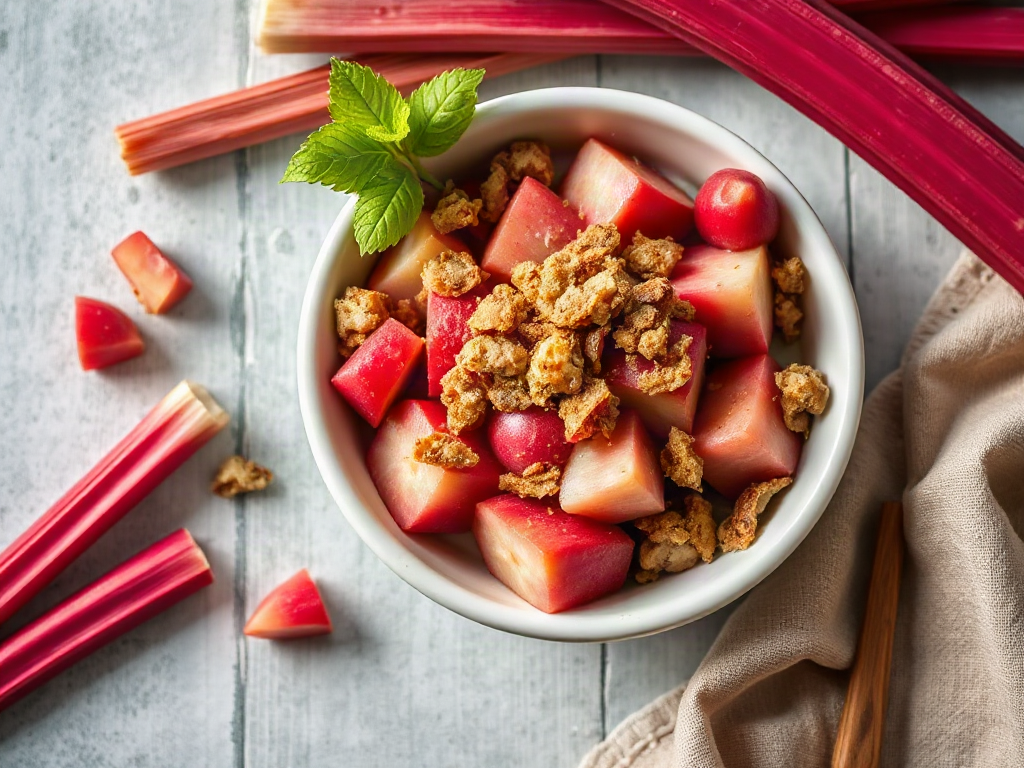
Healthy rhubarb recipes with lower added sugar work best when tart stalks are paired with naturally sweet fruit, aromatic spices, and enough fat or whole-grain texture to balance the sharp flavor. Strawberries, apples, dates, cinnamon, and orange zest can reduce the need for large amounts of table sugar in crisps, compotes, muffins, and breakfast bakes. The most reliable method is to sweeten gradually, taste the cooked rhubarb, and remember that a topping or yogurt accompaniment can provide sweetness without putting it all into the filling. Avoid eating raw rhubarb leaves, and do not assume an unsweetened recipe will taste balanced simply because the sugar was removed.
How To Balance Rhubarb Without Excess Sugar
Rhubarb brings a sharp, almost lemon-like acidity to cooking, so reducing sugar requires more than simply cutting the amount listed in a conventional recipe. The stalks contain plenty of water and soften quickly when heated, while their tartness remains noticeable unless another ingredient provides sweetness, aroma, richness, or contrast. A successful lower-sugar dish therefore uses several small balancing moves rather than relying on one large dose of sugar.
Fruit is the most useful partner. Strawberries add fragrance and soft sweetness, apples contribute body and a mellow flavor, and ripe pears can make a compote taste rounder without dominating it. Dried fruit such as chopped dates or raisins works in small quantities, although it still contributes concentrated sugar and should be treated as a sweetener rather than a free substitute. Orange zest, vanilla, cinnamon, cardamom, and ginger do not make rhubarb sweeter chemically, but they can make a modest amount of sweetener taste more complete.
Acidity also needs to be managed carefully. A squeeze of lemon may brighten a mixture, but rhubarb is already acidic, so adding more citrus without tasting can make the finished dish harsher. Fat and protein offer another form of balance: plain Greek yogurt, unsweetened ricotta, oats, nuts, or seeds can soften the sensory impact of tart fruit when served alongside it. That approach often works better than adding extra sugar to the entire batch.
Use a staged approach when adapting a recipe:
- Begin by removing roughly one-quarter of the added sugar rather than eliminating it immediately.
- Add fruit, spices, or vanilla before deciding whether more sweetener is necessary.
- Taste the cooked filling after it has cooled slightly, since heat can blunt flavor perception.
- Serve a tart preparation with unsweetened yogurt, milk, or a lightly sweetened topping if the contrast suits the dish.
A common mistake is judging raw rhubarb and then adding enough sugar to make the uncooked mixture taste like dessert. Cooking changes its texture and releases juices, while chilling can also soften the perception of sweetness. The practical goal is not to make rhubarb taste like candy. It is to preserve its distinctive tart character while making the complete dish pleasant and satisfying.
For a broader collection of ideas, use these Healthy rhubarb recipes with lower added sugar as a starting point, then adjust the fruit and serving style to match the recipe.
Lower-Sugar Rhubarb Crisp And Compote Methods
A rhubarb crisp is one of the easiest formats to adapt because sweetness can be divided between the fruit layer and the oat topping. Instead of trying to make the rhubarb filling taste sweet on its own, combine chopped stalks with strawberries or diced apple, then use cinnamon and orange zest to build flavor. The topping can provide toasted oats, nuts, and a little brown sugar, creating a contrast that makes the filling seem more balanced.
For about four servings, a practical starting point is several cups of sliced rhubarb combined with one cup of chopped apple or strawberries. Toss the fruit with a modest amount of maple syrup, honey, or sugar, plus cornstarch or flour if the fruit is especially juicy. The thickener is not a sweetener; its job is to keep the crisp from becoming watery. A topping made from rolled oats, whole-wheat flour, chopped walnuts, butter or olive oil, cinnamon, and a small amount of sweetener supplies texture and richness.
The main tradeoff is texture. Cutting the sugar too aggressively can leave the fruit layer sharp and thin-tasting, while adding too much thickener can produce a pasty filling. A crisp with mostly strawberries may need less sweetener than one made with mature, very tart rhubarb and a less-sweet apple. Frozen fruit also releases more liquid, so it may need a little extra thickener and a longer resting period after baking.
Compote gives you more control because it can be tasted and adjusted during cooking. Simmer rhubarb with a splash of water, chopped apple or berries, ginger, and vanilla until the stalks are tender but not completely collapsed. Add sweetener in small increments near the end. This preserves the ability to serve the compote in different ways: over plain yogurt, alongside oatmeal, or with a spoonful of cottage cheese. A compote that seems too tart for eating alone may be exactly right when paired with a creamy component.
Do not boil the mixture aggressively. Rhubarb can break down into fibers and liquid, especially if the pieces are very small. Gentle heat helps retain a more appealing texture. If the compote is watery, continue cooking briefly without a lid rather than immediately adding more sugar. If it is too sharp, blend in cooked apple or a small amount of date paste before reaching for another spoonful of sweetener.
These methods fit naturally with Healthy rhubarb recipes with lower added sugar because they let you control sweetness at the point of serving instead of hiding a large amount in a pastry crust or packaged topping.
Breakfast Bakes That Keep Rhubarb Tart And Tender
Rhubarb works well in breakfast muffins, baked oatmeal, and yogurt-based cakes when its moisture is handled properly. The stalks soften during baking and release juice, which can make a batter heavy or leave a wet pocket around the fruit. A lower-sugar recipe needs enough structure and flavor from oats, whole-grain flour, eggs, yogurt, nuts, or seeds so that sweetness is not the only source of satisfaction.
For muffins, dice rhubarb into small pieces and toss it with a little flour before folding it into the batter. This does not stop all sinking, but it can distribute the fruit more evenly. Plain yogurt or applesauce contributes moisture, while cinnamon, vanilla, and orange zest make the muffins taste fuller without requiring frosting. A small amount of maple syrup or brown sugar can be placed in the batter, with chopped strawberries providing additional sweetness and color.
Baked oatmeal offers a different advantage: oats absorb fruit juices and provide a chewy base. Combine rolled oats with milk, egg, chopped rhubarb, grated apple, cinnamon, and walnuts, then sweeten lightly. The result will be less cake-like than a conventional muffin and may taste more tart when hot. Serving it with milk or plain yogurt can make the dish seem sweeter and more substantial without adding a sugary glaze.
Rhubarb breakfast bakes are not automatically low in sugar. A recipe can use less table sugar yet contain sweetened yogurt, a generous crumble, dried fruit, and a glaze. Check the complete ingredient list rather than focusing on one substitution. Unsweetened dairy or soy yogurt, fresh fruit, and nuts usually provide more control than flavored yogurt or commercial granola.
A useful test is to refrigerate one portion overnight. If the bake becomes gummy, the rhubarb pieces may have been too large, the batter may have contained excess liquid, or the bake may have been removed before the center set. If it becomes dry, the lower sugar level may have reduced moisture retention, or the recipe may simply need more yogurt, fruit, or fat rather than more sweetener. Adjust one variable at a time so you know what improved the result.
Choose a muffin when portability matters, baked oatmeal when you want a spoonable breakfast, and a lightly sweetened yogurt cake when the dish needs to serve as dessert as well. Each format handles tartness differently, so the best choice depends on whether you prioritize convenience, texture, or a more pronounced rhubarb flavor.
Sweetening, Storage, And Common Recipe Mistakes
The best sweetener depends on the recipe, but no sweetener removes the need to manage total sweetness. Sugar helps retain moisture and contributes browning in baked goods; maple syrup and honey add liquid and distinct flavors; dates add fiber and body but can make a filling darker and heavier. Replacing granulated sugar one-for-one with a liquid sweetener may produce a loose batter or a filling that does not set as expected.
When modifying a recipe, preserve its structure first. In a crisp, sugar reduction usually affects flavor more than framework because oats and fat create the topping. In muffins, sugar affects tenderness and browning, so removing too much can create a firmer, paler result. In a compote, the adjustment is easiest because you can taste the mixture and add fruit or sweetener gradually. A recipe such as Healthy rhubarb recipes with lower added sugar should be judged as a complete combination of filling, topping, and accompaniment.
Food safety and ingredient selection also matter. Use only rhubarb stalks; the leaves should not be eaten. Choose firm stalks without slimy spots, trim the ends, and rinse them before slicing. Color is not a dependable measure of tartness, so taste should guide recipe adjustments rather than the redness of the stalk.
Storage changes the eating experience. A fruit crisp can lose its crisp topping in the refrigerator, while a compote generally keeps its texture better in a sealed container. Cool cooked dishes promptly, refrigerate them, and reheat only the portion you plan to eat. Muffins freeze well when wrapped individually, but a yogurt topping should be added after thawing.
Watch for these failure signs:
- Watery filling: the fruit released more liquid than the thickener could manage, or the dish was covered too tightly during cooking.
- Harsh tartness: the recipe lacks a sweet fruit, aromatic seasoning, or creamy accompaniment; adding sugar is only one possible fix.
- Dry baked goods: too much sugar was removed without replacing the lost moisture and tenderness.
- Overly sweet topping: the crumble or glaze is masking rather than complementing the rhubarb.
Prioritize the whole plate or bowl. A modestly sweet rhubarb base with oats, nuts, and plain yogurt may be more satisfying than a heavily sweetened pastry made with little fruit. The point of lowering added sugar is not to remove pleasure or make every recipe austere; it is to use rhubarb’s acidity deliberately and reserve sweetness for the places where it has the greatest effect.
For safe handling and nutrition details, consult current rhubarb information from university extension programs, government food-safety resources, and reputable nutrition databases. These sources can help verify ingredient handling, storage practices, and the distinction between naturally occurring sugars in fruit and added sweeteners in a recipe.
Frequently Asked Questions
Can I remove all the sugar from a rhubarb recipe?
Not always. In compote, you can omit it and rely on strawberries, apples, or dates, but baked goods may become dry, firm, or overly tart because sugar affects moisture and texture as well as flavor.
What fruit makes rhubarb taste less sour?
Strawberries, ripe apples, pears, and stone fruit are useful choices. Apples and pears add body, while strawberries contribute a familiar flavor pairing; taste the cooked mixture before adding more sweetener.
Is maple syrup better than white sugar in rhubarb recipes?
Maple syrup may add a distinctive flavor, but it is still an added sweetener. Because it is liquid, it can change the texture of muffins, cakes, and fillings, so it should not always be substituted in equal volume.
How do I stop rhubarb crisp from becoming watery?
Use an appropriate amount of cornstarch or flour, avoid excess liquid, and let the crisp rest after baking. Frozen fruit may require additional thickening and a little more cooking time.
Can I eat rhubarb raw?
The stalk is commonly used raw in small culinary amounts, although it is very tart. Do not eat rhubarb leaves; use only clean, firm stalks after trimming and washing.
Conclusion
Lower-added-sugar rhubarb cooking succeeds when tartness is balanced rather than covered. Pair the stalks with naturally sweet fruit, use spices and citrus zest for aroma, and let oats, nuts, yogurt, or ricotta contribute texture and richness. Compote is the easiest format for gradual tasting, while crisps let you shift sweetness into a measured topping and breakfast bakes require more attention to moisture and structure. Check the whole recipe for sweetened yogurt, glazes, dried fruit, and packaged toppings before calling it lower in added sugar. Begin with a modest reduction, taste after cooking, and adjust the accompaniment before adding more sweetener. Always discard rhubarb leaves, store cooked dishes safely, and expect the finished dish to retain a pleasant tart edge rather than imitate a heavily sweetened dessert.
Related Content
- How to Choose Superfoods for Immune Boost: Essential Foods for Optimal Health
- How to Incorporate Superfoods Into a Low-Sugar Diet With Balanced Meals and Smarter Swaps
- How to Determine if a Superfood is Genuine: Key Characteristics and Evaluation Methods
- How to Recognize Quality in Superfood Supplements: Essential Ingredients and Sourcing Practices
- What To Do If Whole Foods Don’t Agree With You (A Food, Symptom, And Timing Check)