
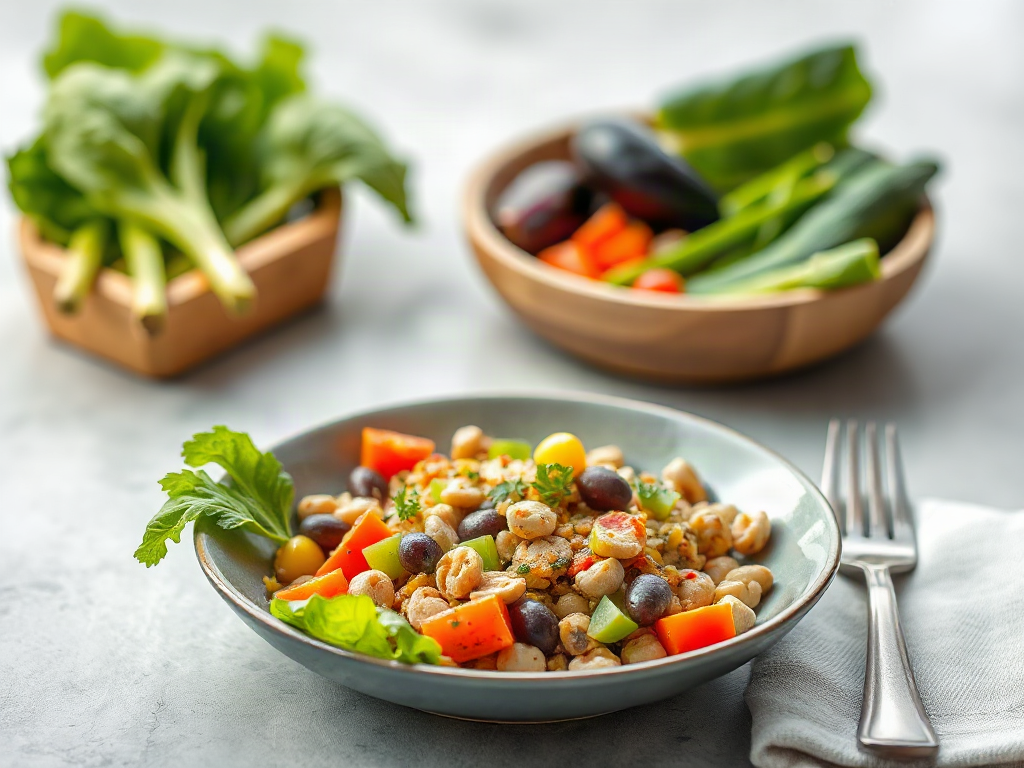
Vegetarian meal plans achieve practical nutrient coverage when daily meals combine legumes or soy, varied whole grains and vegetables, calcium-rich choices, and reliable sources of vitamin B12, iodine, iron, zinc, and omega-3 fats. Build main dishes around a substantial protein source rather than treating cheese, nuts, or vegetables as automatic protein equivalents. Pair plant iron with vitamin C, include fortified foods or appropriate supplements where plants cannot reliably meet needs, and distribute protein across the day. Repeating a sound meal structure is usually more dependable than chasing variety while overlooking portions, fortification labels, or nutrients that require deliberate planning.
Build Each Day Around Nutrient Anchors
A dependable vegetarian day is easier to assemble when several foods have defined nutritional jobs. Legumes and soy can anchor protein, iron, and zinc; milk or fortified plant beverages can anchor calcium; whole grains and starchy vegetables provide energy; and produce supplies vitamin C, folate, potassium, and a wider range of plant compounds. This structure is more useful than judging a menu by how colorful or minimally processed it appears.
Start with three main meals, then identify the substantial protein source in each. A breakfast might use Greek yogurt or calcium-fortified soy milk with oats and seeds. Lunch could feature lentils, quinoa, peppers, and citrus dressing. Dinner might combine calcium-set tofu, broccoli, brown rice, and a sesame sauce. Eggs and dairy can contribute in lacto-ovo vegetarian plans, but they do not need to appear at every meal when beans, lentils, tofu, tempeh, textured vegetable protein, or seitan are available.
Portion size changes whether a food truly functions as an anchor. A tablespoon of seeds adds useful fats and minerals, but it is not equivalent to a generous serving of tofu or lentils. Similarly, spinach contains iron and calcium, yet its calcium is not absorbed as efficiently as calcium from low-oxalate greens, fortified beverages, dairy, or calcium-set tofu. Nutrient lists that ignore serving size and bioavailability can make a lightly built menu look more complete than it is.
Energy intake matters as well. High-fiber vegetarian meals can become filling before they deliver enough calories or protein, particularly for active adults, teenagers, and people with small appetites. Adding olive oil, tahini, avocado, nut butter, bread, rice, or a planned snack can make the menu more workable without requiring an oversized plate. Conversely, relying heavily on cheese, pastries, refined snacks, and meat substitutes may provide ample energy while leaving fiber and produce intake low.
A useful daily check is to confirm that the menu contains legumes or soy, whole grains or another substantial starch, several vegetables and fruits, a dependable calcium source, and a purposeful source of essential fats. The broader approach to Vegetarian meal plans with practical nutrient coverage should remain flexible enough for appetite, budget, culture, and cooking time. The common failure is collecting “healthy” ingredients without assigning any of them responsibility for the nutrients most likely to be missed.
Cover Protein, Iron, Zinc, and Omega-3 Fats
Protein coverage depends more on total intake, portions, and distribution than on combining complementary proteins at every sitting. Soy foods, lentils, beans, split peas, seitan, eggs, dairy, and higher-protein meat alternatives make effective main components. Grains, nuts, seeds, and vegetables contribute additional amounts, but a meal built only from vegetables and a small sprinkle of nuts may still be too light.
Spreading protein among breakfast, lunch, and dinner is often more practical than trying to compensate with one large evening meal. Someone eating toast and fruit for breakfast, a plain salad for lunch, and bean chili for dinner may consume vegetarian protein foods yet have two poorly anchored meals. Adding soy milk and peanut butter at breakfast and chickpeas or baked tofu at lunch creates more even coverage. Protein needs vary with body size, age, activity, pregnancy, and health status, so a registered dietitian can help when requirements are elevated or appetite is limited.
Plant iron is absorbed less predictably than iron from animal foods. Pairing lentils, beans, tofu, pumpkin seeds, or iron-fortified cereal with vitamin C-rich foods can improve the meal’s usefulness. Examples include chili with tomatoes, tofu with broccoli, or fortified cereal with berries. Tea and coffee consumed with an iron-focused meal can reduce absorption, so people with low iron status may benefit from having them between meals. Fatigue alone does not diagnose iron deficiency; blood testing and clinical interpretation are more appropriate than taking high-dose iron without guidance.
Zinc comes from beans, dairy, seeds, nuts, oats, fortified cereal, and some meat alternatives. Soaking, sprouting, fermenting, and leavening may reduce phytates that limit mineral absorption, but a varied diet with adequate portions is more important than micromanaging every preparation method. Tempeh, leavened whole-grain bread, hummus, and pumpkin seeds offer practical ways to diversify sources.
For omega-3 fats, ground flaxseed, chia seeds, hemp seeds, walnuts, and canola oil provide alpha-linolenic acid. Conversion to the longer-chain fats EPA and DHA is limited and varies among individuals. An algae-derived DHA/EPA product may be worth discussing for people who avoid fish entirely, especially during pregnancy or when a clinician identifies a specific need. The mistake to avoid is treating any high-fat vegetarian food as an omega-3 source; almonds, avocado, and olive oil are nutritious, but they do not fill the same role as flax, chia, walnuts, or algae oil.
Plan Deliberately for B12, Calcium, Iodine, and Vitamin D
Vitamin B12 requires an explicit plan because unfortified plant foods are not dependable sources. Lacto-ovo vegetarians may receive some B12 from eggs and dairy, but intake can still be inconsistent. Vegans generally need fortified foods, a supplement, or both. Check the nutrition label on plant beverages, breakfast cereals, nutritional yeast, and meat alternatives because fortification varies by brand and can change. Fermented foods, mushrooms, sea vegetables, and spirulina should not be assumed to provide reliable active B12.
Calcium planning is largely a question of selecting repeatable sources. Dairy milk and yogurt are straightforward options for people who use them. Vegan choices include calcium-fortified soy or pea beverages, calcium-set tofu, fortified yogurt alternatives, tahini, beans, and low-oxalate greens such as kale, bok choy, and turnip greens. Shake fortified plant milk before pouring because added calcium may settle. Plant beverages also differ in protein: fortified almond or oat drinks may supply calcium but considerably less protein than soy or pea beverages.
Iodine is frequently overlooked because its amount is not obvious from a food’s appearance. Iodized salt can provide a predictable source when used in modest quantities, whereas sea salt, kosher salt, and specialty salts are not necessarily iodized. Seaweed iodine levels can vary widely, making frequent large portions an imprecise strategy. People limiting sodium, avoiding iodized salt, or following pregnancy-specific guidance should discuss iodine with a qualified clinician rather than improvising with kelp supplements.
Vitamin D is difficult to obtain from food alone in many dietary patterns. Fortified milk or plant beverages, fortified cereals, eggs, and UV-exposed mushrooms may contribute, but amounts vary. Sun exposure is also an unreliable planning tool because season, latitude, skin pigmentation, clothing, age, and sun-protection practices affect vitamin D production. Testing and supplementation decisions belong in a clinical context, particularly when deficiency risk is elevated.
These nutrients show why “whole food only” is not always the safest standard. Fortification and supplements can address genuine limitations of vegetarian eating without making the rest of the diet less food-centered. Readers using Vegetarian meal plans with practical nutrient coverage should review labels periodically rather than assuming a familiar product remains fortified. A plan is failing when B12 has no reliable source, calcium appears only occasionally, or iodine depends on random restaurant meals.
Turn the Nutrient Priorities Into a Repeatable Plan
A short planning cycle is more sustainable than designing seven unrelated days. Choose two breakfasts, two lunches, and three dinners that share ingredients, then rotate fruit, vegetables, sauces, and seasonings. This limits waste while preserving nutritional variety. Batch-cooked lentils, roasted vegetables, brown rice, washed greens, and a prepared sauce can become grain bowls, wraps, soups, or side dishes without requiring a new recipe each night.
One workable day could begin with oats cooked in fortified soy milk, topped with ground flaxseed and berries. Lunch might be a lentil and roasted-pepper bowl with quinoa, kale, and lemon-tahini dressing. Dinner could pair calcium-set tofu with broccoli, mushrooms, and rice. A snack of yogurt or fortified plant yogurt with fruit can fill an energy or calcium gap. The point is not that everyone needs these exact dishes; each meal has a clear protein component, and the day contains deliberate sources of calcium, iron, vitamin C, and omega-3 fat.
Use this compact check before finalizing a day:
- Protein: Is there a meaningful source at each main meal?
- Iron and zinc: Do legumes, soy, seeds, whole grains, eggs, dairy, or fortified products appear in adequate portions?
- Calcium: Are two or more dependable choices built into meals rather than left to chance?
- B12 and iodine: Is each supplied by a verified, repeatable source?
- Essential fats: Does the day include flax, chia, walnuts, hemp, canola oil, or an appropriate algae-based option?
- Energy and produce: Is the plan filling enough without crowding out fruit and vegetables?
Budget plans can use dried or canned beans, lentils, peanut butter, frozen vegetables, oats, brown rice, cabbage, carrots, and store-brand fortified cereal. Convenience-focused plans may use no-salt-added canned legumes, microwave grains, frozen edamame, bagged greens, pre-seasoned tofu, or nutritionally stronger meat alternatives. Processed does not automatically mean unsuitable: a fortified soy beverage or convenient bean burger may solve a real nutrient or time constraint. Compare sodium, protein, saturated fat, fortification, price, and portion size rather than relying on a “natural” label.
Reassess the plan when hunger remains high, meals repeatedly lack a protein anchor, digestion worsens after a sudden fiber increase, or fortified products disappear from the shopping routine. Increase legumes and whole grains gradually if they are new, use rinsed canned beans for convenience, and adjust portions to appetite. Children, pregnant people, older adults, athletes, and anyone managing anemia, kidney disease, gastrointestinal disease, allergies, or disordered eating need individualized guidance. A useful vegetarian meal plan with practical nutrient coverage is structured enough to reveal gaps but adaptable enough to survive ordinary workdays.
Frequently Asked Questions
Can a vegetarian meal plan provide enough protein without protein powder?
Yes. Beans, lentils, tofu, tempeh, seitan, eggs, dairy, soy milk, and higher-protein meat alternatives can cover protein when portions and total energy intake are adequate. Powder is mainly a convenience for people with elevated needs or limited appetite.
Do vegetarians need to combine proteins at every meal?
No. Eating varied protein foods across the day generally supplies the needed amino acids. A substantial protein source at each main meal is a more practical priority than matching specific foods at every sitting.
Which nutrient is hardest to obtain from a vegan diet?
Vitamin B12 needs the clearest deliberate strategy because unfortified plant foods are unreliable sources. Fortified products or a suitable supplement should provide a consistent amount rather than being used occasionally.
Are vegetarian meat alternatives necessary?
No, but they can add convenience, protein, iron, zinc, or B12 when fortified. Compare labels because products differ substantially in protein, sodium, saturated fat, and micronutrients.
How can someone tell whether a vegetarian plan has nutrient gaps?
Review several typical days for dependable protein, calcium, B12, iodine, iron, zinc, and omega-3 sources. Persistent fatigue, weakness, or other symptoms need clinical assessment rather than self-diagnosis from a menu alone.
Further Reading
Authoritative Sources
- NIH Vitamin B12 Fact Sheet for Consumers
ods.od.nih.govExplains B12 food sources, fortification, deficiency risk, and why people eating little or no animal food need a reliable source
- NIH Iron Fact Sheet for Consumers
ods.od.nih.govProvides evidence-based context for plant iron, absorption, dietary sources, and groups with higher requirements
- NIH Iodine Fact Sheet for Consumers
ods.od.nih.govClarifies iodized salt, seaweed variability, iodine needs, and the risks of both inadequate and excessive intake
- USDA MyPlate
myplate.govOffers a government reference for balancing food groups and selecting vegetarian options within an adaptable eating pattern
Conclusion
Effective vegetarian planning comes from assigning nutritional roles to ordinary foods and repeating those choices often enough to make coverage dependable. Begin by checking each meal for a substantial protein source, then review the full day for calcium, iron, zinc, essential fats, and adequate energy. Treat vitamin B12 and iodine as explicit decisions rather than nutrients that will appear automatically, and verify fortification on product labels. A small rotation of well-built meals is usually easier to sustain than a complicated menu with different recipes every day. Review three representative days, identify the first genuine gap, and adjust one food, portion, fortified product, or supplement decision at a time. Individual medical conditions, pregnancy, childhood, older age, or unusually high activity warrant personalized input from a qualified healthcare professional or registered dietitian.
Related Content
- What to Consider When Selecting Organic Whole Food Brands: Key Factors and Practical Insights
- Why Some Superfoods May Not Fit Dietary Restrictions: Common Issues and Practical Solutions
- Foods High in Potassium for Balanced Meals That Pair Well With Protein, Fiber, and Whole Grains
- Identifying Signs That a Superfood Is Not Beneficial: Common Misconceptions and Health Risks
- Low-Phosphorus Foods for Everyday Meal Planning: A Practical Grocery and Plate-Building Approach