
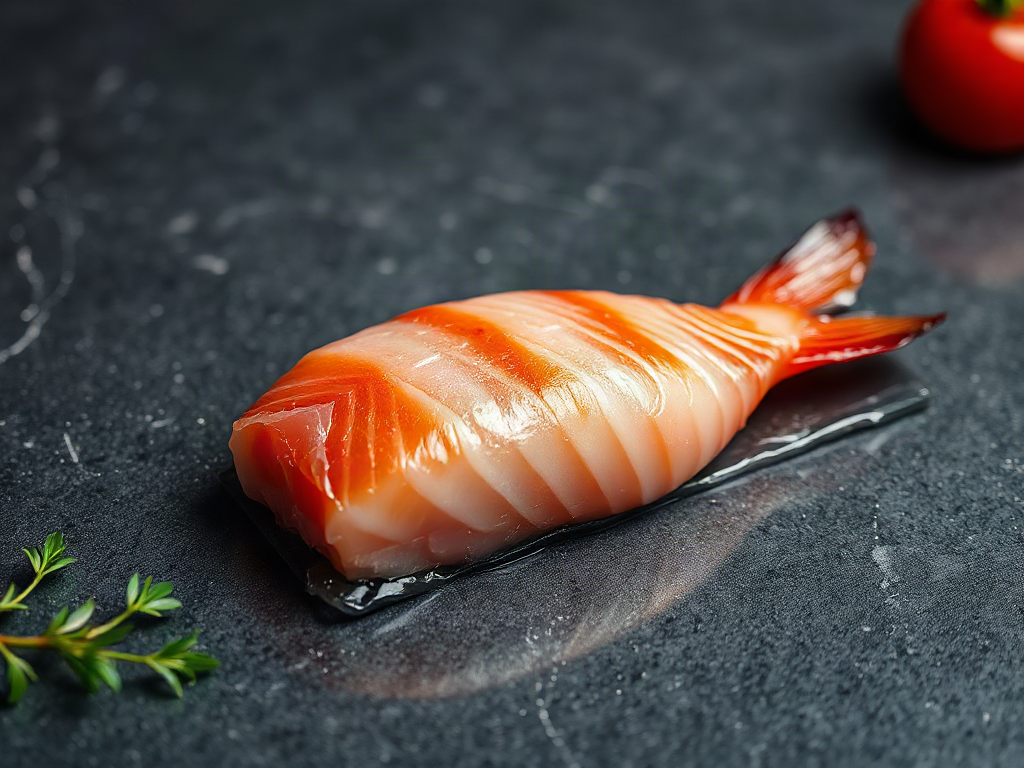
Sashimi nutrition and safe portion considerations vary by fish type, but a practical adult meal is often about 3–5 ounces, adjusted for mercury exposure, energy needs, and other seafood eaten that week. Salmon and tuna provide protein, vitamin B12, selenium, and omega-3 fats, while leaner white fish generally supply fewer calories and less fat. Portion size does not remove hazards from parasites, bacteria, poor temperature control, or cross-contamination, so sashimi should come from a supplier that follows raw-fish handling and freezing controls. Pregnant people, young children, older adults, and anyone with weakened immunity should follow medical and public-health guidance about avoiding raw seafood.
What Nutrients Does Sashimi Provide?
Sashimi is primarily a protein-rich seafood serving, but its calorie, fat, and micronutrient profile changes substantially with the species and cut. Salmon and fattier tuna cuts contribute more fat and dietary energy than lean fish such as flounder, snapper, or sea bream. Most commonly served fish also provide vitamin B12, selenium, and varying amounts of vitamin D and long-chain omega-3 fats.
The absence of rice distinguishes sashimi from sushi rolls and nigiri. A plate of plain raw fish usually contains little carbohydrate unless it is served with sweet sauces or other additions. That can make sashimi a compact protein option, but calling it automatically “lighter” can be misleading. A large assortment, fatty cuts, mayonnaise-based sauces, fried garnishes, and substantial alcohol intake can change the meal’s total energy content considerably.
Fish type matters more than the visual size of the plate. Salmon typically supplies more omega-3 fat than many lean white fish, while tuna is often especially protein-dense and may be relatively lean depending on the cut. Shellfish served in sashimi-style preparations can add nutrients such as zinc, copper, or iron, but their profiles are not interchangeable. Species names on a menu are therefore more informative than broad labels such as “assorted sashimi.”
Condiments deserve separate attention. Soy sauce can add considerable sodium without changing the fish’s nutritional value, and repeated dipping makes intake difficult to judge. Wasabi, ginger, daikon, and shiso may add flavor, but their small restaurant portions do not transform the meal into a nutritionally complete plate. Someone seeking a balanced meal could pair sashimi with vegetables, seaweed salad with a moderate dressing, edamame, or a suitable serving of rice rather than relying on fish alone.
A common mistake is treating all sashimi as nutritionally identical because each piece looks similar. For a useful comparison, check the species, whether the cut is lean or fatty, and how sauces are used. Nutrition databases such as USDA FoodData Central can help compare plain fish, although restaurant cuts and piece weights vary. The practical goal is not exact arithmetic at the table; it is recognizing whether the order is mostly lean fish, fatty fish, high-mercury species, or heavily seasoned accompaniments.
How Much Sashimi Is a Reasonable Portion?
A reasonable sashimi portion for many adults is roughly 3–5 ounces as part of a meal, but that range is a planning reference rather than a universal safety threshold. Appetite, body size, overall diet, pregnancy status, medical needs, and the species selected can all change the appropriate amount. Restaurant piece counts are unreliable because a slice may be thin and small at one venue but thick and heavy at another.
Thinking in ounces is more useful than assuming that a fixed number of pieces equals one serving. Six modest slices might approximate a meal portion in one restaurant, while six thick cuts could represent much more. If portion information is unavailable, compare the total fish with a familiar cooked seafood serving and consider whether the order includes rice, soup, vegetables, or additional protein.
| Eating situation | Practical portion approach | What to check |
|---|---|---|
| Sashimi as the main protein | About 3–5 ounces for many adults | Fish species, cut thickness, and side dishes |
| Mixed sushi meal | Use a smaller sashimi order alongside rolls or nigiri | Total fish, rice, sauces, and fried additions |
| Frequent seafood intake | Track the weekly mix rather than one plate alone | Mercury category and variety across meals |
| Pregnancy or higher medical risk | Follow clinician and public-health advice | Raw-food avoidance and lower-mercury choices |
Frequency changes the decision. A large serving of higher-mercury fish matters more for someone who also eats that species several times during the week than for someone who rarely consumes it. Conversely, repeatedly choosing a lower-mercury species does not make poor refrigeration or unsafe handling acceptable. Chemical exposure and microbial safety are separate issues and require separate checks.
Satiety is another practical signal. Sashimi supplies protein and, in fatty species, fat, but it lacks the fiber found in vegetables, beans, and whole grains. A fish-only meal may feel incomplete even when it contains ample protein. Adding edamame, vegetables, or rice can create a more satisfying meal without ordering an oversized plate of raw fish. People managing sodium may also want to pour a small amount of soy sauce rather than continuously refilling a dipping dish.
The usual failure is searching for a single “safe” piece count. No piece count can account for species, slice weight, mercury category, personal vulnerability, or the rest of the week’s seafood. Start with a moderate order, identify the fish before adding more, and stop treating an assorted platter as if every piece carried the same nutritional and safety considerations.
How Does Fish Type Change Mercury and Nutrition?
Species selection determines the most meaningful tradeoff between omega-3 content, leanness, and mercury exposure. Larger, longer-lived predatory fish tend to accumulate more methylmercury through the food chain. The exact category can differ by species—“tuna” is not one uniform choice—so the menu’s specific name matters when seafood is eaten regularly.
Salmon is commonly chosen when omega-3 fats are a priority and is generally treated differently from high-mercury predatory species in official fish advice. Tuna requires more distinction. Skipjack, albacore, bigeye, and other tuna are not nutritionally or toxicologically identical. A menu that lists only “tuna” gives less decision value than one identifying the species, although restaurant staff may not always have that information readily available.
Lean white fish can be useful for diners seeking protein with less dietary fat, but lower fat should not automatically be interpreted as better. Fatty fish can contribute valuable omega-3 fats and may be more satisfying. The stronger approach is variety: rotate species rather than repeatedly choosing the same fish because it has the highest protein value or the richest taste.
Use the following order of priorities when choosing an assortment:
- Identify the species. Ask what type of tuna or other fish is being served when the menu is vague.
- Consult current official fish advice. This is particularly relevant during pregnancy and for children.
- Vary the selection. Combine lower-mercury choices and avoid making one predatory species the default.
- Match the meal to the week. Consider canned tuna, cooked fish, and other seafood already eaten.
A practical example is a diner who eats tuna sashimi on Friday after having tuna sandwiches twice earlier in the week. The sashimi plate cannot be evaluated in isolation; the repeated species is the relevant pattern. Choosing salmon or another lower-mercury option for that dinner may diversify both nutrients and exposure. Someone who eats seafood infrequently has a different context, but still benefits from knowing the species.
Do not use omega-3 content as a reason to ignore mercury guidance, and do not avoid all seafood solely because some species contain more mercury. Those opposing shortcuts both lose useful context. Official fish-choice charts are designed to separate species into more practical categories, and individualized advice is appropriate when pregnancy, childhood, kidney disease, immune suppression, or another clinical concern affects food choices.

What Makes Raw Sashimi Safer to Eat?
Raw-fish safety depends on sourcing, parasite controls, refrigeration, sanitation, and the diner’s health status—not on freshness claims alone. Fish can look and smell acceptable while still carrying hazards that are not visible. Freezing procedures used for parasite control can reduce certain parasite risks, but freezing does not make contaminated food sterile or correct poor handling after thawing.
A reputable seller should maintain cold temperatures, prevent cross-contamination, and use fish obtained and prepared for raw consumption under applicable food-safety controls. The marketing phrase “sushi-grade” should not be treated as a complete guarantee by itself. What matters operationally is the supplier’s handling process, cold chain, sanitation, and compliance with local requirements.
At a restaurant, notice whether raw fish appears properly chilled and whether the establishment seems attentive to cleanliness and turnover. Fish with an unpleasant sour, rancid, or strongly ammonia-like odor should not be eaten, but the absence of an odor does not prove safety. At home, buy from a seller that can explain whether the product is intended for raw use, transport it cold, keep it refrigerated, and prepare it with clean hands, knives, and surfaces. Avoid allowing raw fish juices to contact ready-to-eat vegetables or cooked foods.
Home freezing is not automatically equivalent to a commercial parasite-control process. Domestic freezers differ in temperature stability, and fish species, thickness, time, and prior treatment all matter. Rather than improvising a freezing schedule, purchase fish that a knowledgeable supplier has designated and handled for raw preparation. If that assurance is unavailable, cooking the fish is the lower-risk choice.
Some people face greater consequences from foodborne illness. Public-health agencies advise higher-risk groups—including pregnant people, young children, older adults, and people with weakened immune systems—to avoid raw or undercooked seafood. A small serving does not cancel that vulnerability. Cooked salmon, shrimp, crab, or other fully cooked seafood can preserve much of the meal’s nutritional value while reducing risks associated specifically with raw preparation.
Warning signs after eating raw seafood can include vomiting, diarrhea, abdominal pain, fever, or an allergic-type reaction. Severe symptoms, dehydration, neurological symptoms, breathing difficulty, symptoms during pregnancy, or illness in a medically vulnerable person warrant prompt professional advice. The key mistake is assuming that a premium restaurant, an expensive cut, or a modest portion makes raw fish risk-free. Safer sashimi is the result of layered controls, and no single label substitutes for them.
Conclusion
A well-chosen sashimi meal starts with species identification, a moderate portion, and a reliable source. Compare fish by more than protein alone: fatty species may offer more omega-3 fats, lean species provide a different energy profile, and larger predatory fish can require closer attention to mercury advice. Count the entire week’s seafood rather than evaluating one restaurant plate in isolation.
Raw preparation adds a separate safety decision. Supplier controls, cold storage, clean preparation, and protection from cross-contamination matter more than premium wording on a menu. Diners in higher-risk groups should favor fully cooked seafood according to public-health and clinical guidance. For the next order, ask what species is being served, choose variety, keep sauces proportionate, and treat uncertainty about raw-fish handling as a reason to select a cooked option.
Frequently Asked Questions
How many pieces of sashimi make one serving?
Piece size varies too much for a universal count. For many adults, roughly 3–5 ounces can serve as a practical meal portion; ask about weight or judge the total fish rather than relying only on slice count.
Is sashimi healthier than sushi rolls?
Sashimi generally has less carbohydrate because it contains no rice, but the better choice depends on portion size, fish species, sauces, and the rest of the meal. Neither format is automatically healthier.
Can freezing make any fish safe to eat raw?
No. Appropriate freezing can control certain parasites, but it does not eliminate every microbial or handling hazard. Use fish supplied specifically for raw preparation rather than relying on an improvised home-freezing process.
Which sashimi choices tend to contain more mercury?
Large predatory species generally warrant more attention, and mercury levels differ among tuna species. Check current official fish advisories instead of treating every tuna or every sashimi fish as equivalent.
Should pregnant people eat sashimi?
Public-health guidance generally advises avoiding raw or undercooked seafood during pregnancy. Fully cooked, lower-mercury fish can provide seafood nutrients without the raw-food risk; personal questions should be discussed with a clinician.