
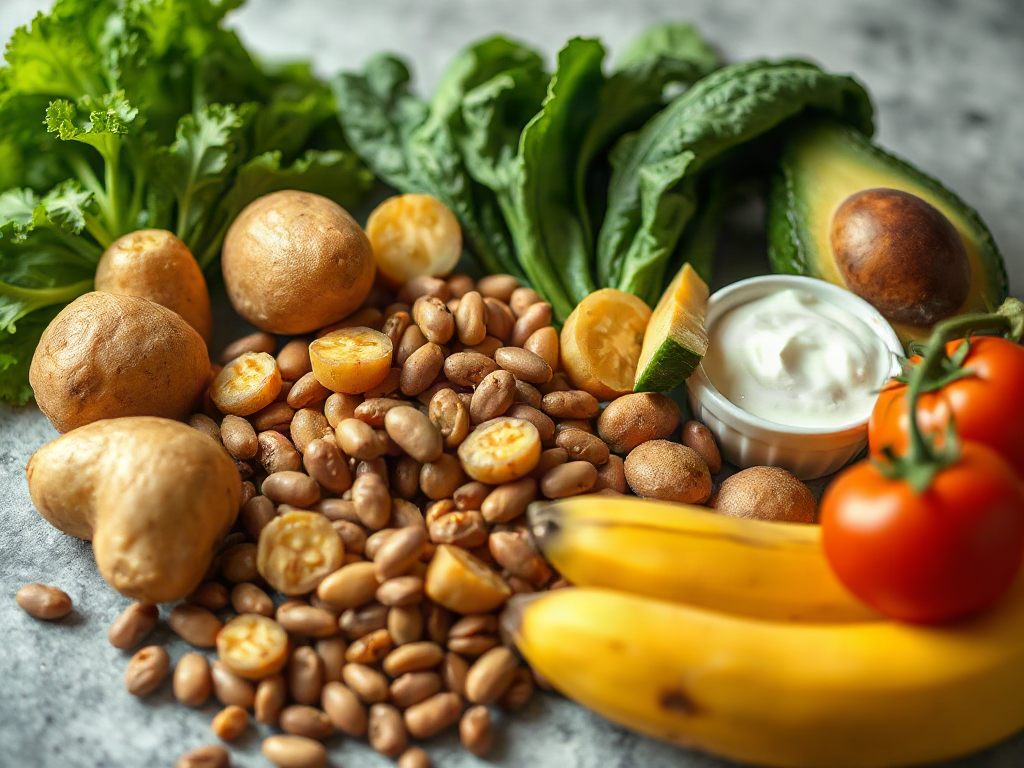
Foods high in potassium for balanced meals include potatoes, beans, lentils, leafy greens, winter squash, tomatoes, yogurt, fish, avocado, and bananas. Build meals by combining one potassium-rich ingredient with a protein source, a high-fiber carbohydrate, and unsaturated fat rather than relying on fruit alone. Potatoes with salmon and greens, lentil bowls with tomatoes, or yogurt with berries and seeds provide practical combinations while adding other nutrients. Preparation matters because heavily processed versions may bring excess sodium, and people with kidney disease or medicines that affect potassium may need individualized limits. A varied plate is usually more useful than chasing a single high-potassium food.
Why Potassium Belongs in a Balanced Plate
Potassium is a mineral and electrolyte involved in fluid balance, nerve signaling, and normal muscle function. Food choices that contain it are most useful when they also contribute fiber, protein, calcium, iron, or unsaturated fat. That is why a baked potato with beans and greens has more meal-building value than a potassium supplement or a snack built around one isolated fruit.
A balanced meal does not require every ingredient to be high in potassium. Instead, use one or two reliable sources as an anchor, then add foods that improve satiety and nutritional variety. For breakfast, plain yogurt with banana, oats, and pumpkin seeds combines potassium with protein, fiber, and fat. At dinner, salmon, roasted potatoes, and spinach provide a different balance of nutrients and textures.
The common mistake is treating potassium as a target that overrides the rest of the plate. Large servings of juice, dried fruit, or potatoes may raise potassium intake but can also displace vegetables, protein, or whole grains. A better priority is variety: choose foods in their less processed form, rotate plant and animal sources, and adjust portions to the rest of the meal.
Readers comparing Foods high in potassium for balanced meals should also notice the sodium relationship. Many minimally processed potassium-rich foods contain little sodium, while packaged soups, frozen entrées, and cured foods may contain both. The food label and the preparation method often matter as much as the ingredient name.
Whole Foods That Add Meaningful Potassium
Beans, lentils, potatoes, leafy greens, squash, tomatoes, dairy foods, fish, avocado, and fruit are practical potassium contributors. Their nutritional roles differ, so choosing among them should depend on the meal rather than on a single ranking. Beans and lentils bring plant protein and fiber; potatoes and squash supply starchy carbohydrate; yogurt contributes protein and calcium; greens and tomatoes add volume and color.
Potatoes are frequently misunderstood because frying and oversized portions can change the overall quality of the meal. A baked or boiled potato with its skin, paired with lentils, cottage cheese, or fish, can function as a satisfying carbohydrate base. Sweet potatoes offer potassium alongside carotenoids and fiber, while winter squash works well in soups, grain bowls, and roasted vegetable plates.
Legumes are especially useful when a meal needs both substance and potassium. Add lentils to tomato soup, use black beans in a grain bowl, or spread mashed white beans onto whole-grain toast. Compared with a banana eaten alone, these combinations provide more protein and fiber, which may make the meal more filling and easier to fit into lunch or dinner.
Leafy greens, tomatoes, and avocado can increase potassium without making a plate feel heavy. Spinach can be folded into eggs, tomatoes can brighten a bean salad, and avocado can replace some mayonnaise in a sandwich. Yogurt, milk, salmon, and other fish offer animal-based options for people who do not want every potassium source to come from plants.
- Starchy anchors: potatoes, sweet potatoes, winter squash, and whole grains.
- Protein-rich options: lentils, beans, yogurt, milk, fish, and poultry.
- Produce additions: leafy greens, tomatoes, avocado, bananas, oranges, and dried apricots.
Serving size still matters. Dried fruit is concentrated and easy to overeat, while fruit juice provides less fiber than whole fruit. Choosing an intact orange, a bean-based salad, or greens cooked with a modest amount of oil may produce a more balanced result than selecting the most concentrated item available.
How to Build Complete Meals Around Potassium-Rich Ingredients
The most dependable method is to pair a potassium-rich base with protein, fiber, and a source of unsaturated fat. This structure supports a satisfying meal without making potassium the only nutritional objective. A bowl of brown rice, black beans, roasted sweet potato, salsa, and avocado illustrates the pattern: the beans provide protein and fiber, the rice and sweet potato provide carbohydrate, and avocado contributes fat and texture.
Breakfast can follow the same logic. Combine plain yogurt with oats, berries, banana slices, and walnuts instead of relying on a sweetened smoothie. The yogurt supplies protein, the oats and fruit add fiber and carbohydrate, and the nuts slow the meal’s digestion while contributing unsaturated fat. For people who prefer savory food, eggs with spinach, tomatoes, and a slice of whole-grain toast offer another route.
Lunch and dinner benefit from contrast. A lentil and tomato stew can be served with greens and a small portion of whole-grain bread. A baked potato can be topped with tuna, plain yogurt, and chopped scallions rather than butter alone. A fish plate can use roasted squash and leafy vegetables instead of a packaged side dish that is higher in sodium.
One weak assumption is that a meal becomes healthier simply because it contains avocado, banana, or potato. The rest of the plate still determines its balance. A potato covered with processed meat and salty sauce is a different choice from a potato served with beans and vegetables. Likewise, an avocado-heavy meal may be energy-dense without supplying enough protein. Use potassium-rich foods as components, not as a substitute for meal composition.
A simple planning checklist can keep the approach practical:
- Choose one potassium-rich anchor, such as beans, potatoes, yogurt, greens, or fish.
- Add a clear protein source if the anchor is mainly produce or starch.
- Include a high-fiber carbohydrate or additional vegetables based on hunger and activity.
- Use herbs, citrus, garlic, or spices before reaching for heavily salted sauces.
- Check whether the finished meal is varied, satisfying, and appropriate for personal medical needs.
This framework works for home cooking, packed lunches, and simple restaurant orders because it focuses on relationships among foods rather than a rigid menu.
Preparation, Sodium, and Health-Related Limits
Cooking method changes the practical value of potassium-rich ingredients. Roasting potatoes or squash concentrates flavor without requiring a salty sauce. Steaming greens preserves their volume, while sautéing them with garlic and a small amount of oil can make a larger serving appealing. Canned beans and tomatoes can be convenient, but choosing lower-sodium products or rinsing beans may reduce the meal’s salt burden.
Fresh is not automatically superior in every situation. Frozen spinach, peas, and squash can be useful, affordable choices when they contain few added ingredients. A plain frozen vegetable may be a better everyday option than fresh produce that spoils before it is used. The important comparison is often plain versus heavily seasoned or processed, not fresh versus frozen.
Potassium guidance requires medical context for some people. Those with kidney disease, certain adrenal or heart conditions, or medicines that alter potassium handling may be told to limit high-potassium foods. Others may receive different advice based on laboratory results and treatment. No general meal plan should be used to change medication, treat a condition, or deliberately increase potassium without clinical guidance.
Supplements deserve particular caution. A varied diet provides potassium alongside fiber and other nutrients, whereas a supplement can add a concentrated dose without improving the rest of the meal. The right choice for a person with a diagnosed deficiency or restricted diet depends on a clinician’s assessment. The same ingredient can be sensible for one diner and inappropriate for another.
Watch for practical signs that the plan needs adjustment. If meals feel repetitive, rotate beans with fish, yogurt, poultry, or tofu. If hunger returns quickly, increase protein or fiber rather than simply adding more fruit. If packaged foods dominate the menu, compare labels for sodium and added ingredients. These checks make the approach more useful than memorizing a list of high-potassium foods.
A Practical One-Day Potassium-Focused Meal Plan
A one-day pattern can show how the foods fit together without implying that one menu suits everyone. Breakfast might include plain Greek yogurt, oats, banana, berries, and seeds. This meal uses dairy for protein and calcium, fruit for potassium and carbohydrate, and oats and seeds for fiber and texture. Unsweetened yogurt keeps the bowl from becoming primarily added sugar.
Lunch could be a lentil and tomato salad with spinach, cucumber, whole-grain bread, and olive oil dressing. Lentils make the salad more substantial than vegetables alone, while tomatoes and spinach add produce variety. If canned lentils are used, rinsing them can help manage sodium. A person needing more protein could add tuna, chicken, tofu, or a side of yogurt.
Dinner might pair baked salmon with a medium potato, roasted green vegetables, and a tomato-based relish. This plate differs from lunch in texture and protein while retaining a potassium-rich foundation. For a plant-based alternative, use black beans or lentil patties in place of salmon. The important feature is not the exact menu; it is the combination of a potassium source with protein and vegetables.
Snacks can be chosen according to hunger rather than treated as mandatory potassium doses. An orange with nuts, yogurt with fruit, or a small serving of edamame may fit better than juice or a large portion of dried fruit. If calories, carbohydrate, or potassium need to be limited, the snack should be adjusted with professional guidance.
Use Foods high in potassium for balanced meals as a flexible planning idea: select accessible ingredients, cook enough for leftovers, and evaluate the whole plate. The strongest plan is one that can be repeated, tastes good, and respects medical restrictions rather than one that contains the maximum possible amount of potassium.
Frequently Asked Questions
Which foods are naturally high in potassium?
Beans, lentils, potatoes, sweet potatoes, leafy greens, tomatoes, winter squash, yogurt, fish, avocado, bananas, and oranges are useful whole-food sources.
Can a potato fit into a balanced meal?
Yes. Pair a baked or boiled potato with protein such as beans, fish, yogurt, or tofu and add non-starchy vegetables instead of relying on salty toppings.
Are bananas the best way to get potassium?
Bananas are convenient, but they are only one option. Beans, potatoes, greens, squash, yogurt, and fish can add potassium while contributing different nutrients.
Do people with kidney disease need to avoid all potassium-rich foods?
Not necessarily. Potassium limits depend on kidney function, laboratory results, medicines, and clinical advice, so individualized guidance is safer than blanket avoidance.
How can I increase potassium without adding much sodium?
Choose plain produce, unsalted beans, low-sodium canned goods, yogurt, potatoes, greens, and fish, then flavor meals with herbs, garlic, citrus, and spices.
Conclusion
Potassium-rich eating works best as a meal-building strategy, not a contest to find the single highest-potassium ingredient. Use beans, lentils, potatoes, greens, squash, tomatoes, yogurt, fish, fruit, and avocado in rotation, then complete the plate with protein, fiber, and suitable fats. Plain or lightly processed versions usually make sodium easier to manage, while frozen and canned options can remain practical when labels and preparation are considered. People with kidney disease or medicines that affect potassium should follow individualized clinical advice before increasing intake. Choose two or three meals this week to revise with a potassium-rich anchor, a clear protein source, and vegetables; that small change is more sustainable than rebuilding the entire diet at once.
Related Content
- How to Modify Superfood Intake for Specific Diets With Foods, Portions, and Timing
- Steps to Take If Superfoods Lead to Weight Gain: Practical Adjustments and Nutritional Insights
- Reasons Whole Food Superfoods Might Not Meet Expectations: Common Misconceptions and Practical Insights
- When Superfoods Disrupt Your Digestive Routine: Symptoms, Causes, And A Gentle Reset
- Challenges With Superfood Meal Prepping: Common Mistakes and Practical Solutions