
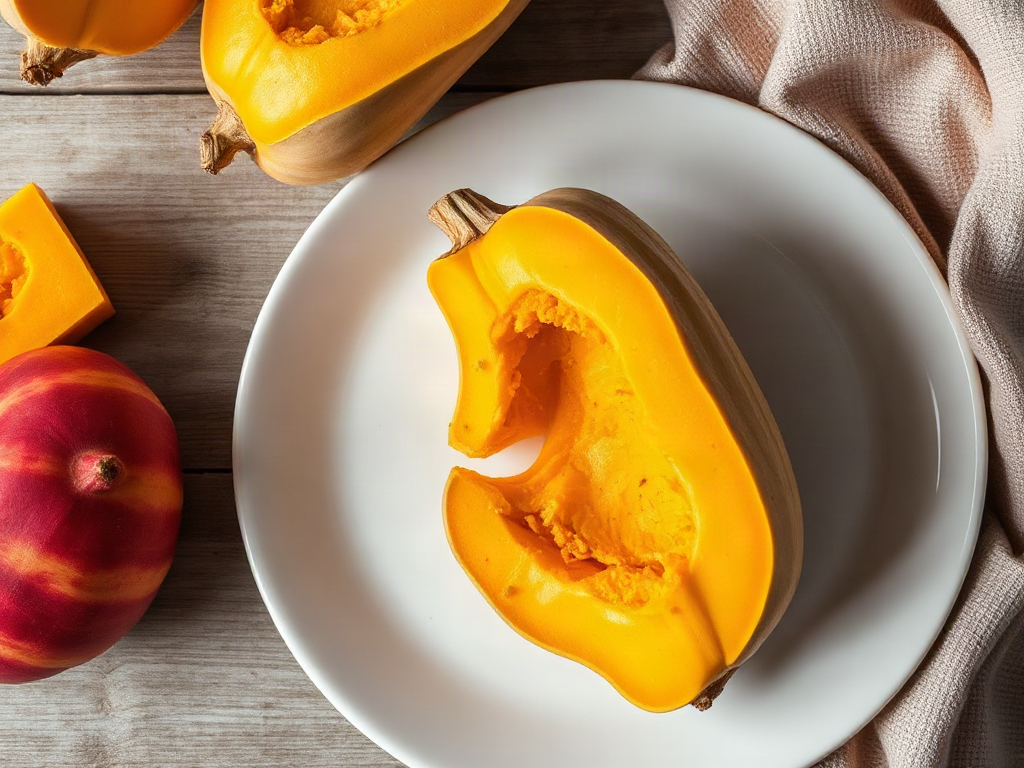
Kabocha squash nutrition and serving benefits come from its dense, naturally sweet flesh, which supplies dietary fiber, carotenoids, potassium, and carbohydrate for a satisfying side dish or meal component. Roasting, steaming, or simmering preserves its useful whole-food qualities, while leaving the skin on can add texture and reduce preparation waste when the squash is well washed and cooked until tender. A practical serving is about one cup of cooked flesh, adjusted for the rest of the meal and individual carbohydrate needs. Pairing it with beans, eggs, fish, tofu, or yogurt adds protein, since squash alone is not a complete meal.
Kabocha Squash Nutrition In Practical Terms
Kabocha squash is a winter squash with firm orange flesh, a compact texture, and a flavor often compared with pumpkin and sweet potato. Its nutrition is most useful when viewed as part of a meal rather than as a miracle ingredient. Cooked flesh contributes carbohydrate for energy, dietary fiber for meal structure, and orange-yellow plant pigments such as carotenoids. It also provides minerals including potassium, although the exact amount varies with serving size, preparation, and food database.
The orange color is a useful visual clue, not a promise of a specific health outcome. Carotenoids are plant compounds found in foods such as carrots, pumpkin, and sweet potatoes, and eating a varied diet rich in colorful produce is generally more meaningful than chasing one isolated nutrient. Kabocha also has a naturally sweet taste, which may make it easier to build a satisfying plate without adding much sugar. That sweetness does not make it nutritionally identical to candy or a dessert; the squash retains water, fiber, and micronutrients that refined sweets generally lack.
Fiber is one of the more practical reasons to include it. A fiber-containing side dish tends to add bulk and chew, which can make a meal feel more substantial than a very small portion of a refined starch. The response is individual, especially for people managing digestive symptoms or following a medically prescribed eating pattern. Increasing portions abruptly may cause discomfort for someone unused to higher-fiber meals, so a modest serving alongside familiar foods is a sensible test.
Unlike leafy greens, kabocha is not especially useful as a concentrated source of protein. A bowl containing only mashed squash may taste satisfying but leave the meal nutritionally lopsided. Add lentils, black beans, tofu, eggs, chicken, fish, or plain yogurt depending on the dish. Readers comparing it with Kabocha squash nutrition and serving benefits can use a simple question: does the serving replace a starch, add a vegetable, or function as the main bulk of the meal? That answer determines what else belongs on the plate.
Serving Benefits And Meal Balance
A useful serving of kabocha supports meal balance by combining a starchy vegetable with fiber and colorful plant compounds. It can stand in for part or all of rice, pasta, bread, or potato in a meal, but the substitution should reflect the recipe. Cubes mixed with chickpeas and greens create a different balance from a large bowl of squash puree topped with butter. The first option brings protein and contrasting texture; the second may need a protein source and a sharper or more savory component.
Its dense flesh works well in several eating patterns because it can be roasted as a side, folded into soup, mashed, or added to grain bowls. A practical plate might include roasted kabocha, salmon or tofu, and steamed greens. Another option is a warm bowl with squash, lentils, cabbage, and a spoonful of tahini dressing. These combinations matter because protein and fat can contribute satiety and flavor, while acidic ingredients such as lemon or vinegar offset the squash’s sweetness.
The main tradeoff is carbohydrate concentration. Kabocha is a nutritious whole food, but it still contributes carbohydrate, and a large portion alongside rice, bread, or dessert can make the meal more starch-heavy than intended. Someone using carbohydrate-counting guidance should account for the cooked portion rather than treating squash as a free food. People with diabetes or other conditions requiring individualized nutrition advice should follow their clinician or registered dietitian’s plan rather than assume that a particular squash variety has no effect on blood glucose.
Portion also changes the role of added ingredients. A tablespoon of oil used across a tray is different from several spoonfuls of butter added to one serving. Sweet sauces, maple syrup, and heavily salted seasoning can shift the dish away from the simple whole-food profile many readers want. For a balanced starting point, use a moderate scoop, add a protein-rich food, and let herbs, garlic, ginger, chili, citrus, or toasted seeds supply character before adding extra sugar.
Cooking Methods That Preserve Texture And Value
Cooking method determines whether kabocha becomes pleasantly creamy, watery, dry, or difficult to cut. Roasting concentrates its sweetness and creates browned edges, while steaming produces soft flesh with less surface browning and little added fat. Simmering is convenient for soup but can dilute flavor if the cooking liquid is discarded. The best method depends on the intended use rather than on a claim that one technique is universally healthiest.
For roasting, wash the exterior, use a stable cutting board, and cut the squash into manageable wedges or cubes with a sturdy knife. Many cooks remove the seeds first and roast the flesh with a small amount of oil. The skin is edible when thoroughly cleaned and cooked until tender, though its texture may remain firmer than the flesh. If the squash is difficult to cut, briefly softening it according to a trusted kitchen method can reduce knife strain; never force a blade through an unstable whole squash.
Steaming is a strong choice for mash, baby-food-style textures, or meals where a clean squash flavor matters. It avoids the extra oil used for roasting, but it can produce less appealing texture if the pieces are crowded or cooked far past tenderness. For soup, simmer cubes until a fork passes through easily, then blend with beans, lentils, or unsweetened dairy if a more complete meal is needed. A soup made only from squash and stock may be pleasant but often lacks protein.
Cooking does not make every nutrient behave identically. Heat and contact with water can affect individual vitamins, while adding a small amount of fat may improve the eating experience and help the body use fat-soluble carotenoids; that is not a reason to pour on oil. Evidence and food composition vary by preparation, so prioritize a method that encourages you to eat the squash regularly without excessive sugar, salt, or fat. The useful test is practical: tender pieces, appealing flavor, and a portion that fits the rest of the meal.
Portions, Storage, And Common Mistakes
A one-cup serving of cooked kabocha is a reasonable planning reference, not a universal prescription. A smaller scoop may suit a meal that already includes grains, while a larger share may work when squash replaces the main starch and is paired with protein and non-starchy vegetables. Package labels and food databases may list different values because raw and cooked weights are not interchangeable. Weighing or measuring cooked squash is more useful than estimating from the size of an uncooked wedge.
Storage affects both safety and quality. Keep uncut squash in a cool, dry location, and refrigerate cut pieces in a covered container. Cooked squash is easiest to use when divided into meal-sized portions before chilling. Reheat only the amount needed, and discard food showing spoilage such as an off smell, unusual sliminess, or mold. Freezing cooked flesh can be convenient for soups and mash, although thawed pieces may lose some of the firm texture that makes roasted wedges appealing.
Several mistakes repeatedly undermine an otherwise sensible serving plan:
- Treating it as a non-starchy vegetable: it can fill the vegetable role, but it also supplies carbohydrate and may replace grains or potatoes more naturally than it replaces leafy greens.
- Using sweetness as a reason for added sugar: roasting with spices can bring out flavor without turning a side dish into dessert.
- Serving it alone: combine it with a protein source and, when useful, a little unsaturated fat.
- Ignoring preparation yield: seeds, peel decisions, and water loss change the final amount available to eat.
A quick decision check keeps the serving realistic: identify the squash’s role, choose the cooking method, add a protein partner, and inspect the total starch and added-fat load. That approach is more reliable than labeling kabocha simply as good or bad. Readers seeking another practical application can use Kabocha squash nutrition and serving benefits as a starting point for comparing a roasted side with soup, mash, or a grain-bowl component.
Simple Ways To Build A More Complete Serving
Kabocha becomes more useful when its texture and sweetness solve a specific meal problem. Roasted cubes can replace some of the grain in a lunch bowl, mashed flesh can thicken soup without cream, and chilled leftovers can become a filling for a savory wrap. Each use changes the balance of the meal, so the supporting ingredients should change too. A squash-and-rice bowl may need beans and greens; a lentil soup with squash may already have enough carbohydrate and protein for a light meal.
Try a basic assembly rather than an elaborate recipe: one portion of cooked squash, one protein-rich ingredient, one or two vegetables with a different texture, and a flavorful dressing or seasoning. For example, combine warm squash with white beans, arugula, pumpkin seeds, and lemon. The beans contribute protein and fiber, the greens add freshness, and the seeds provide crunch. For breakfast, a small serving alongside eggs can replace hash browns, while plain yogurt and cinnamon create a different use without requiring syrup.
People with food allergies, kidney-related dietary restrictions, digestive disorders, or prescribed carbohydrate limits may need individualized adjustments. Potassium content, portion size, and tolerance can matter in those settings, and a general nutrition article cannot replace medical advice. The same caution applies to claims that kabocha treats a disease or guarantees weight change. Its value comes from fitting a varied eating pattern, not from a special therapeutic effect.
Use leftovers strategically within their texture limits. Firm roasted pieces suit salads and bowls; softer cooked flesh works better in soup, mash, or sauces. If a preparation repeatedly becomes watery or bland, reduce cooking liquid, improve seasoning, or choose roasting instead of boiling. Those small changes usually matter more than switching between closely related winter squash varieties.
Frequently Asked Questions
Is kabocha squash a good source of fiber?
It contributes dietary fiber, although the amount depends on the cooked serving and whether the food database entry is raw or prepared. Increase portions gradually if your usual diet is low in fiber.
Can kabocha replace potatoes or rice?
It can replace some or all of a meal's starch, especially when roasted or mashed. Keep a protein source and another vegetable in the meal rather than replacing every component with squash.
Is the kabocha skin edible?
Yes, the skin is commonly eaten after thorough washing and cooking, but it may stay firmer than the flesh. Peel it if the texture is unpleasant or the recipe requires a smooth puree.
What is the healthiest way to cook kabocha?
Steaming, roasting, and simmering can all fit a nutritious diet. Choose the method that suits the dish, and limit excessive oil, sugar, and salt rather than treating one cooking method as automatically superior.
Does kabocha squash count as a low-carbohydrate food?
No. It is a nutrient-dense squash but still supplies carbohydrate. Portion it according to the rest of the meal and follow individualized guidance if you manage blood glucose or another medical condition.
Conclusion
Kabocha earns a place on the plate through its firm texture, natural sweetness, fiber, carotenoids, and useful role as a whole-food starch. The most practical approach is to measure the cooked portion, decide whether it replaces another starch or adds to the meal, and pair it with protein and contrasting vegetables. Roasting favors browned edges and firm pieces, while steaming and simmering suit mash and soup. Avoid assuming that nutritious means unlimited, that sweetness requires added sugar, or that squash alone makes a complete meal. Start with a moderate serving, use leftovers in a format that suits their texture, and adjust the portion to your appetite, health needs, and total meal composition.
Related Content
- Steps to Take If Superfoods Lead to Weight Gain: Practical Adjustments and Nutritional Insights
- Evaluating the Sourcing Practices of Superfood Brands: Key Indicators for Ethical and Sustainable Choices
- What to Do If a Superfood Triggers Digestive Issues: Identifying Symptoms and Adjusting Your Diet
- How to Adapt Your Superfood Intake During Pregnancy: Essential Nutrients and Safe Choices
- What to Consider When Comparing Superfoods for Health Benefits: Key Nutritional Factors and Real-World Applications