
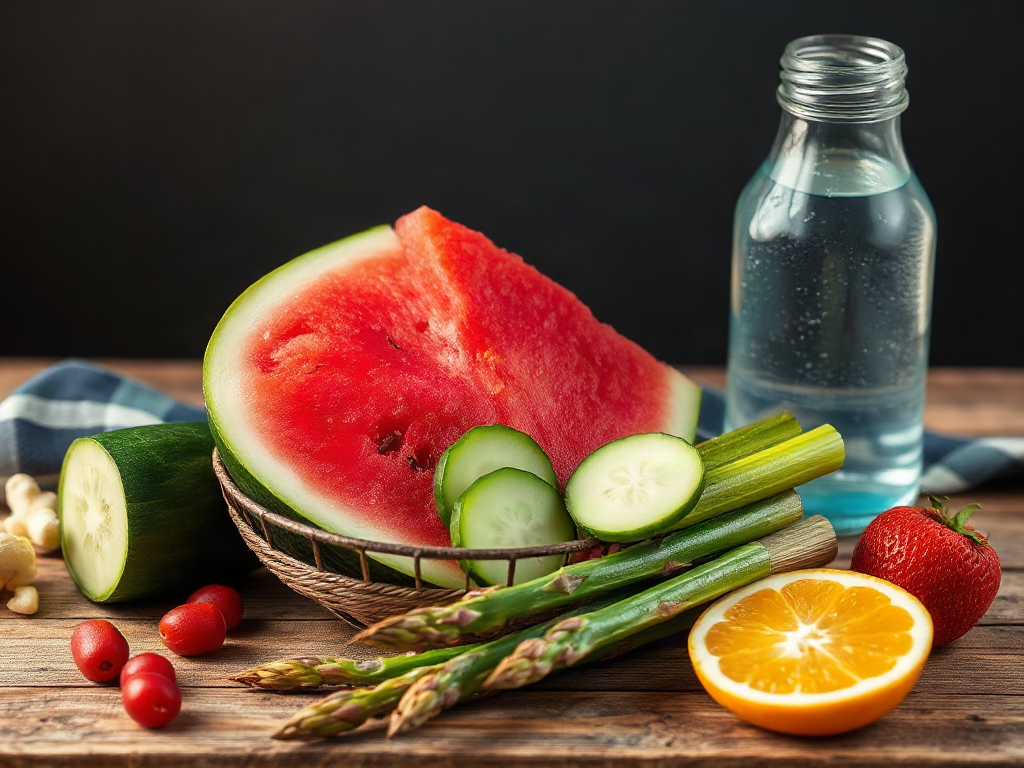
Natural diuretic foods and hydration cautions matter because foods such as watermelon, cucumber, asparagus, celery, citrus, and caffeinated drinks may increase urine output modestly while also supplying water or electrolytes. Their effect is usually milder than prescription diuretics, but large amounts, hot weather, vomiting, diarrhea, kidney disease, or medicines that affect fluid balance can raise dehydration and electrolyte risks. Use these foods as part of normal meals rather than as a rapid “water weight” strategy, and drink according to thirst unless a clinician has prescribed fluid limits. Dark urine, dizziness, unusual weakness, confusion, fainting, or a racing heartbeat warrant prompt attention.
How Natural Diuretic Foods Affect Fluid Balance
Natural diuretic foods may increase urine production through their water content, caffeine, potassium, or other plant compounds, but their effects should not be equated with prescription water pills. A meal containing cucumber, watermelon, or citrus delivers fluid along with food structure and nutrients. That combination generally produces a gentler change than a concentrated diuretic medication, which is designed to alter kidney handling of sodium and water.
Urination is controlled by several overlapping signals. The kidneys adjust water excretion in response to blood volume, sodium concentration, hormones, temperature, physical activity, and recent fluid intake. A person who eats a water-rich meal may urinate more simply because more fluid has entered the digestive system. Caffeine can add a mild short-term diuretic effect, especially in people who consume little of it, while regular caffeine users may notice less change.
The phrase “detox” can mislead readers into expecting fat loss, toxin removal, or a lasting reduction in swelling. A lower scale reading after a salty meal or a day of increased urination usually reflects shifting water and intestinal contents, not body-fat loss. Natural diuretic foods and hydration cautions are therefore best considered a fluid-balance question, not a cleansing program.
For example, watermelon and cucumber may be useful in a warm-weather lunch because they contribute water and make a meal more appealing. Replacing that lunch with only fruit, herbal tea, or coffee is a different situation: it may provide too little sodium, protein, energy, or total fluid for someone exercising or sweating. The food itself is not automatically risky; the pattern surrounding it determines whether hydration remains adequate.
A common mistake is judging hydration solely by how often someone urinates. Urine frequency varies with bladder habits, caffeine, alcohol, ambient temperature, and timing. Thirst, urine color trends, headache, dry mouth, exercise conditions, and overall wellbeing provide more useful context than trying to maximize urine output.
Whole-Food Choices That May Increase Urination
Water-rich produce is the most practical category of foods sometimes described as natural diuretics. Cucumber, watermelon, celery, lettuce, tomatoes, strawberries, oranges, grapefruit, and broth-rich vegetables add substantial water to meals. Their value is not that they force the kidneys to “flush” the body, but that they can replace dry, highly processed snacks with foods that contain fluid, potassium, fiber, and other nutrients.
Asparagus is often mentioned because it contains plant compounds associated with a noticeable urine odor in some people. That odor does not prove that asparagus has created a medically meaningful diuretic response. Celery and parsley are also frequently promoted for this purpose, yet eating them in ordinary culinary portions is unlikely to mimic a pharmacological diuretic. Concentrated juices, extracts, and supplements deserve more caution because the dose is less obvious and may be much higher than a normal serving.
Caffeinated beverages require a separate comparison. Coffee, black tea, green tea, energy drinks, and some cocoa products may increase alertness and can modestly affect urine output. Coffee or tea consumed with a meal is not automatically dehydrating; the fluid they provide still counts toward intake for most healthy adults. Energy drinks are less attractive as a hydration choice because caffeine may be paired with large amounts of sugar, acidic ingredients, or stimulants.
A sensible meal example is a bean-and-grain bowl with cucumber, tomatoes, leafy greens, citrus, and a source of protein, followed by water according to thirst. That pattern differs from drinking several cups of strong tea while skipping meals. The first supports regular nourishment and fluid intake; the second may produce shakiness, frequent urination, or a headache without solving the underlying need for food or water.
Potassium-rich foods such as potatoes, bananas, beans, leafy greens, and oranges can support normal fluid regulation, but potassium is not a universal remedy for dehydration. People with impaired kidney function or medicines that raise potassium may need individualized limits. Likewise, grapefruit can interact with certain medicines even though it is a nutritious fruit. Whole foods are usually easier to portion than powders or capsules, but “natural” does not remove medication or medical-condition considerations.
When choosing among these options, prioritize ordinary portions, variety, and the rest of the meal. A food that contributes water and nutrients may be a useful swap for salty packaged food, but it should not be treated as a treatment for edema, high blood pressure, or kidney disease.
Hydration Cautions, Medicines, and Higher-Risk Situations
Hydration cautions become more important when fluid losses are already occurring or when the body cannot adjust fluid and electrolytes normally. Heat exposure, endurance exercise, fever, vomiting, diarrhea, heavy sweating, and alcohol can all change the balance. Adding large amounts of caffeine or very watery produce while restricting ordinary drinking may worsen lightheadedness or weakness rather than improve how a person feels.
Prescription diuretics, blood-pressure medicines, lithium, some diabetes medicines, and drugs that affect kidney function can change the consequences of dietary choices. A person taking a diuretic for heart, liver, or kidney disease should not use “natural” diuretic foods to adjust the medication’s effect. The same caution applies to herbal products marketed for water loss; their contents and strength may be inconsistent, and they can add interactions that are absent from a normal serving of cucumber or fruit.
Kidney disease, heart failure, advanced liver disease, and certain endocrine conditions may require a clinician-directed fluid, sodium, or potassium plan. In these settings, advice designed for a healthy adult can be inappropriate. A glass of water or a serving of fruit may fit one person’s plan and conflict with another’s, depending on kidney filtration, swelling, laboratory results, and prescribed restrictions.
Warning signs should be interpreted in context. Darker urine after waking may simply reflect overnight concentration, while persistent very dark urine, marked thirst, dizziness on standing, confusion, fainting, unusual weakness, or a racing heartbeat is more concerning. Swelling, shortness of breath, rapid unexplained weight changes, or reduced urination can also signal a problem that should not be managed with food experiments. Severe symptoms, fainting, confusion, or breathing difficulty require urgent medical attention.

Overhydration is another overlooked risk. Drinking excessive amounts of plain water in an attempt to counter frequent urination or “flush” the kidneys can dilute blood sodium, particularly during prolonged exercise or when intake is far beyond thirst. More water is not automatically safer. The better comparison is between steady, ordinary drinking and deliberate fluid loading: the first generally respects the body’s signals, while the second can create a new electrolyte problem.
The practical rule is simple: if a health condition, prescribed fluid limit, or regular medication affects water or electrolyte handling, discuss dietary changes with the treating clinician or pharmacist before deliberately increasing diuretic foods, caffeinated drinks, or herbal products.
A Practical Way to Use These Foods Safely
Safe use begins with the purpose behind the change. If the goal is a refreshing meal, choose water-rich produce freely within a balanced eating pattern. If the goal is to reduce puffiness after a salty meal, return to usual meals, moderate sodium, and normal drinking rather than attempting rapid water loss. If the goal is to treat ongoing swelling or frequent urination, food is not a substitute for finding the cause.
A useful decision sequence is:
- Check the context: consider heat, exercise, illness, alcohol, caffeine, and recent salty foods.
- Keep the portion ordinary: use produce in meals instead of relying on concentrated juices, teas, powders, or extracts.
- Pair food with nourishment: include protein, carbohydrate, and, when appropriate, sodium-containing foods rather than consuming only watery produce.
- Drink steadily: use thirst, meal timing, activity, and urine trends as guides instead of forcing large volumes.
- Reassess symptoms: stop the experiment and seek advice if dizziness, weakness, confusion, fainting, or unusual changes in urination appear.
Signs that the approach is reasonable include feeling normally energized, having no persistent thirst or dizziness, and eating a varied diet without chasing a particular urine frequency. Signs that it is failing include replacing meals with drinks, increasing caffeine to suppress appetite, repeatedly weighing yourself to track water shifts, or using food to explain swelling that continues for days.
Consider two common scenarios. Someone who sits in a warm office and wants a lighter lunch may benefit from a salad with cucumber, tomatoes, beans, and a normal beverage. Someone completing a long run in heat has a different need: watermelon alone may not replace the fluid and electrolytes lost through sweat, and a sport-specific plan may be more appropriate. Someone with kidney disease has a third set of constraints and should follow individualized advice rather than copying either example.
Food preparation also matters. Fresh produce, unsalted beans, and plain yogurt can fit a fluid-conscious meal, whereas a “detox” drink may contain concentrated herbs, added sugar, or several servings of fruit without the fiber that slows eating. Caffeine late in the day may disturb sleep, and poor sleep can increase thirst, appetite, and reliance on stimulating drinks the next day. Natural diuretic foods and hydration cautions should therefore be applied to the complete routine, not one ingredient in isolation.
There is no reliable reason to maximize diuresis in a healthy person. The practical priority is stable hydration, adequate nourishment, and medical evaluation when a symptom persists. Use food variety to support normal routines, not to pursue a temporary scale change.
For individualized questions about fluid limits, potassium, medication interactions, or persistent swelling, use guidance from a licensed clinician, pharmacist, government health agency, or recognized medical organization. Official medication information and kidney or heart disease resources are more dependable than supplement marketing claims about “flushing” or “detoxing.”
Conclusion
Water-rich produce and moderate caffeinated drinks can fit a balanced diet, but their modest diuretic effects should not be confused with a treatment or a detox method. Use cucumber, watermelon, citrus, tomatoes, leafy greens, and similar choices as parts of complete meals, and avoid replacing food or normal drinking with concentrated teas, extracts, or rapid water-loss plans. Heat, exercise, illness, prescription medicines, kidney disease, heart failure, and fluid restrictions change the safety calculation. Pay attention to persistent thirst, dizziness, unusual weakness, confusion, fainting, swelling, or major changes in urination. When symptoms continue or a medical condition affects fluid balance, professional guidance takes priority over dietary experimentation. Natural diuretic foods and hydration cautions are most useful when they lead to steadier, better-informed choices rather than more aggressive fluid manipulation.
Frequently Asked Questions
Which foods are commonly considered natural diuretics?
Water-rich produce such as cucumber, watermelon, celery, tomatoes, citrus, and leafy greens is commonly described this way. Coffee, tea, and other caffeinated drinks may have a mild effect, while herbs and concentrated products require more caution.
Can natural diuretic foods cause dehydration?
Ordinary portions of water-rich produce rarely cause dehydration by themselves. Risk rises when someone combines increased urination with heat, illness, heavy sweating, restricted drinking, large caffeine doses, or a condition affecting fluid balance.
Does coffee count toward hydration?
For most healthy adults, the fluid in moderate coffee or tea intake contributes to daily hydration. Large caffeine doses, energy drinks, or individual sensitivity can still cause unwanted urination, sleep disruption, or symptoms that call for a different beverage choice.
Should people with kidney or heart disease eat diuretic foods?
They should follow their individualized fluid, sodium, and potassium plan. A clinician or pharmacist can explain whether specific foods, beverages, or supplements fit the person’s medicines and laboratory results.
When should frequent urination or swelling be checked?
Arrange medical advice for persistent or unexplained changes, especially with swelling, shortness of breath, pain, marked thirst, reduced urination, dizziness, or rapid weight change. Confusion, fainting, or breathing difficulty needs urgent attention.