
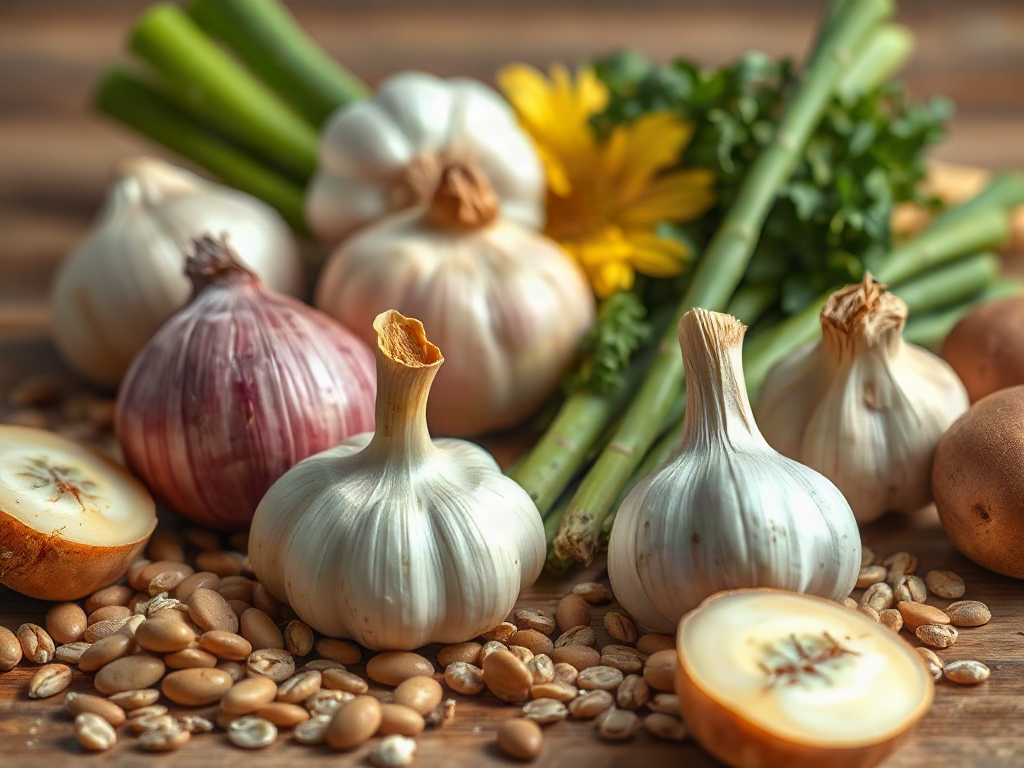
Prebiotic foods that support digestive bacteria include onions, garlic, leeks, asparagus, chicory root, Jerusalem artichokes, oats, barley, beans, lentils, bananas, and firm potatoes. Their fermentable fibers and resistant starches pass partly undigested into the colon, where resident microbes use them to produce compounds such as short-chain fatty acids. A practical approach is to add one new source at a time, increase portions gradually, and drink enough fluid because a sudden fiber increase may cause gas, cramping, or bloating. Variety matters more than relying on a single “superfood,” while people with irritable bowel symptoms may need smaller portions or individualized guidance.
How Prebiotic Foods Feed Digestive Bacteria
Prebiotic foods contain carbohydrates or fibers that resist digestion in the upper digestive tract and become available to microorganisms in the colon. The bacteria ferment these materials and produce metabolites, including short-chain fatty acids, that interact with the intestinal lining and the broader gut environment. The effect is not a simple matter of adding more roughage; different fibers favor different microbial activities, so variety generally provides a more useful pattern than depending on one ingredient.
Onions, garlic, leeks, and asparagus contain fructans, while chicory root is a concentrated source of inulin. Oats and barley provide beta-glucan, and beans and lentils supply fermentable fibers alongside protein and minerals. Firm bananas and cooked-then-cooled potatoes contain more resistant starch than very ripe bananas or freshly steaming potatoes. These distinctions explain why two foods that both appear on a fiber list may feel quite different during digestion.
A common misconception is that every prebiotic food should be eaten in large amounts immediately. Fermentation is useful, but it also creates gas as bacteria process the substrate. Someone moving from a low-fiber eating pattern to large servings of beans, raw onions, and wheat bran in a single day may experience discomfort without gaining a clearer sense of which food caused it. A slower progression makes the response easier to interpret.
Think of the goal as supplying a changing selection of fermentable material while preserving comfort. A bowl of oats at breakfast, lentils at lunch, and cooked asparagus with dinner offers a broader fiber profile than a daily supplement used without attention to the rest of the diet. Readers comparing options can use prebiotic foods that support digestive bacteria as a working list, then choose foods that fit their cooking habits and tolerance.
Whole-Food Sources Worth Adding First
Vegetables in the allium family are practical prebiotic choices because onions, garlic, leeks, and shallots can be used in ordinary meals rather than treated as special-purpose ingredients. Cooking softens their texture and may make them easier to include, although the specific carbohydrate profile and individual response still matter. Asparagus, artichokes, and chicory also contribute fermentable fibers, but chicory root is often used in packaged products as an added fiber, where the dose can be less obvious than it is in a serving of vegetables.
Legumes offer a particularly useful combination: fermentable carbohydrate, protein, and substantial satiety. Lentils often cook faster than many dried beans, making them a manageable first experiment. Canned beans can be rinsed to reduce some of the liquid that may contribute to digestive discomfort, though rinsing does not remove all fermentable carbohydrate. If a person is unused to legumes, two or three spoonfuls folded into soup or a grain bowl may be more realistic than a large serving of bean salad.
Whole grains add another route. Oats and barley provide beta-glucan, while less-refined grain products retain more of the original grain structure than highly processed alternatives. Resistant starch is a separate consideration: slightly green bananas and potatoes that have been cooked and cooled contain more of it than their softer, hotter counterparts. Reheating can preserve some resistant starch, but preparation does not turn every potato dish into a therapeutic food.
The best first choice depends on the meal rather than on a ranking of ingredients. Oats may suit a person who eats breakfast at home; barley may work in soup; lentils may replace part of the meat in a stew. A frequent mistake is to purchase a product labeled “added prebiotic fiber” and assume it is interchangeable with a varied whole-food pattern. Added fibers can be useful, but they may deliver a concentrated dose with more bloating risk and fewer accompanying nutrients than vegetables, legumes, fruit, or intact grains.
- For a gentle breakfast: oats topped with a firm banana and nuts.
- For a savory meal: lentils, barley, or beans combined with cooked vegetables.
- For more allium flavor: use cooked leek or onion in a soup before attempting larger raw portions.
Portions, Preparation, And Tolerance
Digestive tolerance is shaped by portion size, food preparation, the rest of the meal, and a person’s existing symptoms. A food may be nutritious and still be poorly tolerated in a particular quantity. Larger servings of inulin-rich chicory, onions, garlic, or Jerusalem artichokes can produce noticeable gas in susceptible people, while the same person may manage oats or a small lentil portion comfortably.
Increase one variable at a time. For example, keep breakfast familiar while adding a modest spoonful of lentils to lunch for several days, then assess bloating, stool changes, urgency, and comfort before adding another concentrated source. Adequate fluid helps fiber move through the digestive tract, but forcing excessive water does not cancel out an abrupt increase. Chewing well and choosing cooked vegetables can also make a high-fiber meal less demanding than a large raw salad.
Preparation changes texture and sometimes the amount of fermentable material reaching the colon. Soaking and thoroughly cooking dried beans improves tenderness and may make them easier to eat, but it does not guarantee freedom from gas. Canned legumes offer convenience and predictable portions. Chilled potato or rice dishes can contain resistant starch, yet food safety still depends on prompt cooling, refrigeration, and sensible storage rather than on the prebiotic claim alone.
People with irritable bowel syndrome or sensitivity to fermentable carbohydrates may need a more individualized approach. Several foods on a prebiotic list, including wheat-based products, onions, garlic, legumes, and some fruit, can be high in FODMAP carbohydrates. A temporary structured restriction may be used in some clinical settings, but it is not a reason to permanently eliminate every fermentable food without professional guidance. The useful question is not whether a food is universally “good” or “bad,” but which dose and preparation are workable.
Signs that the approach is progressing well include a gradual increase in fiber variety, stable comfort, and bowel habits that remain manageable. Persistent pain, blood in the stool, unexplained weight loss, repeated vomiting, or significant ongoing diarrhea warrants medical assessment rather than experimentation with more fiber.

Building A Practical Prebiotic Eating Pattern
A sustainable pattern distributes prebiotic sources across the week instead of concentrating them in one ambitious meal. Start by identifying foods already accepted by the household, then make a small substitution: oats for a refined breakfast cereal, barley in a soup, lentils in place of part of the ground meat, or a firm banana with breakfast. This approach improves consistency and makes it easier to notice whether symptoms are linked to dose, timing, or a specific ingredient.
Variety can be tracked without turning meals into a laboratory project. A simple weekly check might include a legume, a whole grain, an allium or asparagus, a fruit, and a starchy food prepared in a way that retains some resistant starch. The list is a prompt, not a requirement. Someone with limited cooking equipment may get more value from canned beans, rolled oats, frozen vegetables, and pre-cooked barley than from expensive powders or unfamiliar specialty produce.
Meal composition also matters. A large portion of beans paired with raw onions, wheat bread, and a high-fiber dessert may create a heavier fermentable load than each food would alone. Spreading those choices across meals can be more comfortable. Pairing a new fiber source with familiar foods makes it easier to identify a reaction, while adding several new products at once creates confusion and often leads to unnecessary elimination.
Commercial prebiotic powders deserve particular caution. They can provide a measured amount, but labels may use terms such as inulin, fructooligosaccharides, galactooligosaccharides, or resistant dextrin, and tolerance differs among individuals. A powder is not automatically superior to food, and a larger dose is not automatically more effective. Whole foods generally bring additional nutrients and culinary usefulness, whereas a supplement may be considered when diet alone is impractical and a qualified professional has helped assess the need.
For readers refining an existing routine, this food-focused reference can support a simple decision process: choose one source, use a modest portion, keep preparation consistent, observe comfort, and expand variety only when the previous step is going well. That method respects both the biology of fermentation and the realities of busy meals.
Readers seeking deeper evidence can consult nutrition information from government health agencies, university extension programs, and peer-reviewed gastroenterology or microbiome research. These sources are useful for distinguishing naturally occurring food fibers from isolated ingredients and for reviewing individualized approaches to digestive symptoms.
Frequently Asked Questions
What is the easiest prebiotic food to add first?
Rolled oats, a firm banana, or a small serving of lentils are practical starting points because they fit familiar meals and can be portioned easily. Choose one rather than adding several new foods at once.
Do prebiotic foods cause gas?
They may, because gut bacteria ferment some of their fibers and produce gas. Gradual increases, smaller portions, thorough cooking, and consistent hydration may improve tolerance.
Are onions and garlic always the best choices?
No. They contain useful fermentable carbohydrates, but they can be difficult for people sensitive to FODMAPs. Oats, barley, or a modest legume portion may be more comfortable alternatives.
Can supplements replace prebiotic foods?
Supplements provide selected fibers but do not replace the nutrients and variety found in whole foods. Their concentrated doses may also cause more symptoms, so use should be individualized.
How long does it take to notice a difference?
Responses vary with the food, portion, existing diet, and digestive health. Track comfort and bowel patterns over several days rather than expecting a universal timeline or immediate result.
Conclusion
Supporting digestive bacteria through food is mainly a matter of supplying varied, fermentable plant material at a tolerable pace. Prioritize ordinary ingredients such as oats, barley, lentils, beans, asparagus, cooked alliums, firm bananas, and appropriately prepared potatoes rather than chasing a single highly marketed product. Portion size and preparation deserve as much attention as the ingredient itself: a gradual addition is easier to evaluate than a sudden high-fiber overhaul. If bloating or pain develops, reduce the dose, change the preparation, and test alternatives instead of abandoning every source. People with persistent or severe digestive symptoms should seek clinical advice, particularly before making major restrictions. A varied pattern that fits real meals and remains comfortable is more useful than an aggressive plan that cannot be maintained.
Related Content
- Superfoods That May Help Reduce Bloating and Discomfort: Key Foods to Alleviate Digestive Issues
- What to Do If a Whole Food Diet Isn’t Satisfying: Common Mistakes and Solutions
- Superfoods for Natural Energy: The Ultimate Guide to All-Day Vitality
- What to Do If a Superfood Causes Mood Swings: Understanding Symptoms and Practical Solutions
- The Role of Whole Foods in Managing Chronic Conditions: Effective Dietary Choices and Their Impact