
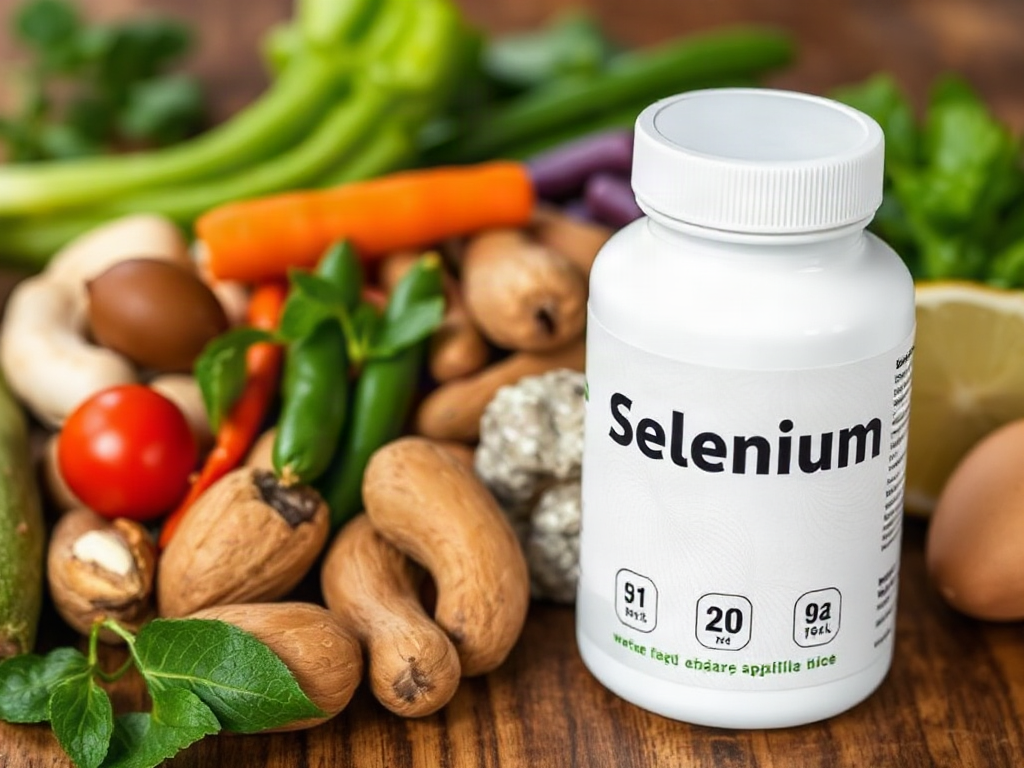
Selenium foods and safe intake thresholds depend on both the food source and total daily exposure: seafood, eggs, meat, dairy, legumes, grains, and Brazil nuts can contribute useful amounts, while concentrated supplements make excess easier to reach. Adults generally need 55 micrograms daily, whereas the tolerable upper intake level is 400 micrograms per day from food and supplements combined. Brazil nuts deserve special caution because their selenium content varies widely, so eating several every day can create an unpredictable intake. A varied diet is usually safer than routine high-dose supplementation, and anyone with kidney disease, thyroid treatment, or a prescribed supplement plan should ask a clinician before changing intake.
How Selenium Intake Is Measured
Selenium is a trace mineral used in selenoproteins involved in antioxidant protection, thyroid hormone metabolism, and immune function. The body needs only a small amount, so the useful range is narrower than the serving sizes suggested by many supplement labels. Dietary reference values distinguish between an adequate daily target and a tolerable upper intake level; they are not interchangeable.
For adults, the recommended dietary allowance is 55 micrograms per day. Pregnancy raises the target to 60 micrograms, and lactation raises it to 70 micrograms. The adult tolerable upper intake level is 400 micrograms per day, counting food, fortified products, and supplements together. That ceiling is not a recommended goal. It marks an exposure level above which the risk of adverse effects becomes more concerning.
Food composition also varies by soil, growing conditions, animal feed, processing, and portion size. A food database value is therefore an estimate rather than a guarantee for every package or harvest. This variability matters most with Brazil nuts, whose selenium concentration can differ substantially from nut to nut. A label or database may help with planning, but it cannot turn an inconsistent source into a precise daily dose.
A common mistake is to compare a supplement’s percentage of the daily value with the upper limit as though they describe the same thing. A product providing 100% of the daily value is designed to cover a reference need, not to indicate that more is better. Before adding a pill, review the full pattern: a multivitamin, a selenium-specific capsule, fortified foods, and frequent high-selenium items may all contribute to the same total. The related resource Selenium foods and safe intake thresholds can be useful when checking that complete picture.
Selenium-Rich Foods and Portion Context
Seafood, organ meats, poultry, meat, eggs, dairy products, grains, and legumes can all supply selenium. The amount depends on the specific item, origin, and serving, so a food should be judged within a meal pattern rather than assigned a fixed universal number. Tuna, sardines, shrimp, salmon, eggs, chicken, and turkey are practical examples, while beef and dairy can provide smaller but regular contributions.
Plant sources are especially dependent on soil selenium. Lentils, beans, whole grains, and some seeds may contribute meaningful amounts in one region and less in another. That does not make them unreliable foods overall; it means selenium should not be the sole reason for choosing a particular plant food. A varied diet can provide fiber, protein, and other minerals while allowing selenium intake to come from several moderate sources.
Brazil nuts are the notable exception to ordinary portion planning. One nut may contain a substantial amount, but the amount can swing widely. Eating one occasionally is not equivalent to taking a measured supplement, and eating a handful daily may push intake much higher than expected. People who use Brazil nuts specifically for selenium should avoid treating a large serving as a routine requirement.
A realistic meal pattern might include an egg at breakfast, yogurt or milk during the day, beans or whole grains with lunch, and fish or poultry at dinner. That approach spreads exposure across foods instead of concentrating it in one product. It also makes the diet less vulnerable to a single inaccurate estimate. If seafood is not part of the diet, eggs, dairy, poultry, legumes, and fortified products may still contribute, but individual needs and overall dietary adequacy should be assessed separately.
The opposite mistake is assuming that every food labeled “superfood” is automatically a better selenium choice. A concentrated powder or snack containing Brazil nut ingredients may have less predictable exposure than an ordinary mixed meal. Selenium foods and safe intake thresholds should be considered alongside the product’s serving size, ingredient list, and any added selenium.
Safe Upper Limits and Excess Exposure
Selenium excess is usually an accumulation problem rather than the result of one ordinary meal. The risk increases when a person combines several sources: a multivitamin, a targeted supplement, fortified foods, and repeated large servings of high-selenium items. The 400-microgram adult upper limit applies to the total, not to each product separately.
Long-term excessive intake can cause selenosis. Possible signs include a garlic-like breath odor, metallic taste, nausea, diarrhea, fatigue, hair loss, and brittle or abnormal nails. Nerve symptoms and skin changes can also occur with significant excess. These symptoms are not specific to selenium, so they should not be used for self-diagnosis. A person with persistent symptoms should seek medical evaluation rather than guessing that selenium is the cause.
Supplement labels deserve close attention because amounts may be shown in micrograms per serving, and one serving may contain multiple capsules. Some formulas also combine selenium with iodine, zinc, or herbal ingredients marketed for thyroid support. Taking more than the label serving, stacking similar products, or adding a separate selenium capsule to a multivitamin can create an avoidable exposure problem.
Deficiency and excess require different decisions. A low-selenium diet, malabsorption condition, dialysis, or a medically identified need may justify professional advice about supplementation. Conversely, a person eating a varied diet usually has little reason to chase a high intake. Selenium is not a general-purpose energy enhancer, thyroid treatment, or substitute for medical care. Evidence for using extra selenium to prevent or treat disease is mixed and condition-specific, so high doses should not be adopted on the assumption that antioxidant effects always improve health.
When a supplement is necessary, check the amount of elemental selenium, the serving instructions, and every other product used that day. A clinician or pharmacist can help reconcile the label with medications, laboratory findings, pregnancy, kidney function, or a diagnosed deficiency. Stopping a nonessential high-dose product is a different decision from changing a prescribed regimen.
Building a Sensible Selenium Routine
The safest routine usually emphasizes dietary variety, moderate portions, and a periodic review of supplements. Begin by identifying repeated sources rather than trying to calculate every crumb. Record supplements, fortified meal replacements, Brazil nuts, frequent seafood meals, and any products marketed for thyroid or antioxidant support. This short inventory often reveals duplication more clearly than a food diary alone.
Next, compare the combined amount with the adult target and upper limit. The target of 55 micrograms is a reference for adequacy, while 400 micrograms is a boundary for avoiding excessive exposure; neither number means that every day must land at an exact point. Food values are estimates, and an occasional variation is expected. The practical goal is to avoid a sustained pattern that is both concentrated and poorly measured.
Use the following checklist when deciding whether a change is sensible:
- Check whether a multivitamin already contains selenium.
- Read the serving size rather than only the front-label claim.
- Treat Brazil nuts as an occasional, variable source instead of a precise supplement.
- Spread sources across ordinary meals rather than combining several concentrated products.
- Ask a healthcare professional before supplementing for thyroid symptoms, pregnancy, kidney disease, malabsorption, or a laboratory abnormality.
A useful comparison is a food-first approach versus a supplement-first approach. Food-first intake provides other nutrients and tends to be less concentrated, although soil and food-source variation prevent exact dosing. Supplementation can be more predictable when a genuine indication exists, but it increases the chance of stacking and makes a high dose easier to consume daily. Neither approach should be judged in isolation from the person’s medical history and complete diet.
Signs that the plan is working include no reliance on repeated high-dose products, a varied menu, and a clear reason for any supplement being used. Warning signs include adding products with overlapping claims, eating several Brazil nuts every day to “guarantee” selenium, or continuing a supplement despite possible toxicity symptoms. For more meal-specific planning, revisit Selenium foods and safe intake thresholds and focus on consistency rather than maximum intake.
Frequently Asked Questions
How much selenium do adults need each day?
The adult recommended dietary allowance is 55 micrograms per day. Pregnancy and breastfeeding have higher reference values, so those situations merit individualized planning.
How many Brazil nuts are safe to eat?
There is no dependable universal number because selenium varies considerably between nuts. Avoid using large daily servings as a precise supplement, particularly alongside multivitamins or selenium tablets.
What is the selenium upper limit?
For adults, the tolerable upper intake level is 400 micrograms per day from food, beverages, and supplements combined. It is a safety ceiling, not a target.
Which foods contain selenium?
Seafood, eggs, poultry, meat, dairy products, legumes, and grains can provide selenium. Amounts vary with the specific food, portion, processing, and growing or feeding conditions.
Can too much selenium cause symptoms?
Excessive exposure may cause garlic-like breath, a metallic taste, nausea, diarrhea, fatigue, hair or nail changes, and other symptoms. Seek medical advice rather than self-diagnosing from one symptom.
Further Reading
Authoritative Sources
- Selenium Fact Sheet for Health Professionals
ods.od.nih.govProvides reference intakes, upper limits, food sources, and safety information from the National Institutes of Health
- Selenium Fact Sheet for Consumers
ods.od.nih.govSummarizes selenium's functions, dietary sources, supplement concerns, and possible signs of excessive intake
Conclusion
Selenium planning is less about finding the highest-selenium item and more about keeping total exposure measured and proportionate. Use varied meals that may include seafood, eggs, dairy, poultry, legumes, and grains, while treating Brazil nuts as a variable source rather than a precisely dosed supplement. Review every label when using a multivitamin, fortified product, or thyroid-focused formula, because the 400-microgram adult upper limit includes all sources. A medically indicated supplement may have a place, but high-dose self-treatment is difficult to justify without professional guidance. The next useful step is a simple inventory of recurring foods and supplements, followed by a clinician or pharmacist review if pregnancy, kidney disease, malabsorption, symptoms, or laboratory concerns are involved.
Related Content
- What to Know About Superfoods and Allergies: Identifying Risk Factors and Safe Choices
- Which Superfoods Support Joint Health and Mobility: Essential Foods to Enhance Flexibility and Reduce Inflammation
- Why Some Superfoods May Not Complement Your Diet: Understanding Nutritional Conflicts and Dietary Balance
- How to Evaluate if a Superfood Fits Your Diet: Key Nutritional Metrics and Personal Goals
- How to Identify Fake or Misleading Superfood Claims: Key Signs and Common Pitfalls