
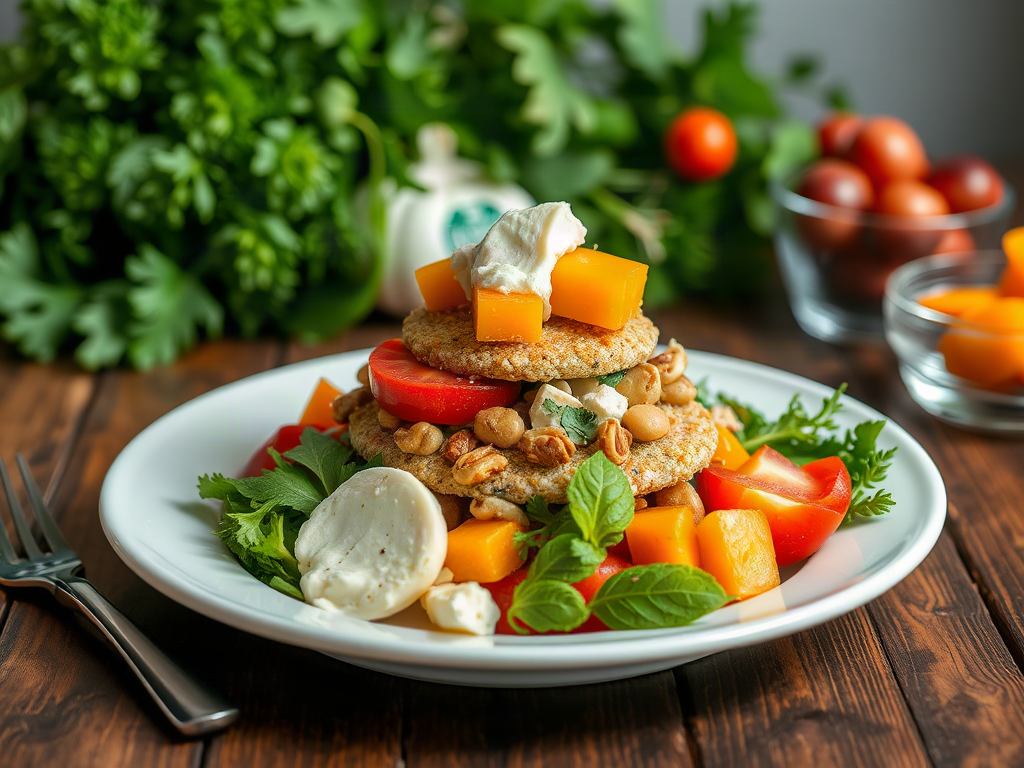
The Mediterranean diet pyramid places vegetables, fruit, whole grains, beans, herbs, nuts, and olive oil at the daily foundation, with fish, seafood, eggs, poultry, yogurt, and cheese eaten regularly in moderate portions and red meat, sweets, and highly processed foods used less often. A practical plate usually gives vegetables the largest share, adds a smaller portion of beans, fish, or poultry, and includes whole grains or potatoes according to appetite and activity. Olive oil supplies the main added fat, while water is the default drink. Portion needs change with age, body size, medical conditions, and energy expenditure, so the pyramid describes frequency and balance more reliably than a rigid calorie plan.
How the Mediterranean Pyramid Is Organized
The Mediterranean diet pyramid is a frequency-and-priority model rather than a strict prescription with identical serving counts for everyone. Its broad base emphasizes daily habits: vegetables, fruit, beans and lentils, whole grains, nuts, seeds, herbs, olive oil, water, and shared meals. Foods higher on the pyramid appear less often or in smaller amounts, including fish, seafood, poultry, eggs, fermented dairy, and sweets. Red and processed meats generally occupy the least frequent position.
The structure matters because it shifts attention from a single “superfood” to the composition of the entire eating pattern. Olive oil may replace butter in cooking, but pouring generous amounts over a plate already rich in cheese, nuts, and bread can make the meal energy-dense. Likewise, whole-grain bread remains part of the pattern, yet a meal built mostly from bread with little produce or legumes does not reflect the pyramid’s balance.
A useful way to read the levels is to ask three questions: What should appear most often, what should provide the meal’s protein, and what belongs as an occasional choice? A lentil and vegetable stew with whole-grain bread sits near the foundation. Grilled fish with greens, beans, and potatoes fits the middle layers. A meal centered on processed meat, refined bread, and a sweet dessert reverses the pyramid even if olive oil is used.
The pyramid also includes social and lifestyle elements such as leisurely meals, cooking, movement, and moderation with wine where culturally appropriate. Alcohol is not required, and people who do not drink should not begin for health reasons. The food layers are the practical priority, especially for people adapting the pattern to a different culture, budget, allergy profile, or medical plan.
Portions for Daily and Weekly Food Groups
Portion guidance works best when paired with frequency. Most meals can be built around a generous serving of non-starchy vegetables, then adjusted with a protein food and a grain, potato, or other carbohydrate source. Fruit commonly functions as a dessert or snack, while beans and lentils can appear several times per week or more often when they are well tolerated. Nuts and seeds are nutrient-dense, so a small handful is usually more realistic than eating directly from a large container.
For a plate-based starting point, fill about half the plate with vegetables, reserve roughly one quarter for beans, fish, poultry, eggs, or another protein source, and use the remaining quarter for whole grains or potatoes. This is not a mandatory ratio. Someone with high energy needs may require more grains, while someone managing a condition that affects carbohydrate intake may need individualized advice. The framework simply prevents bread, pasta, cheese, or meat from quietly becoming the entire meal.
Weekly foods deserve different treatment. Fish and seafood can replace meat in meals, but the best choice depends on availability, personal preference, and local seafood-safety guidance. Yogurt and modest portions of cheese provide familiar dairy options, while poultry and eggs offer alternatives to red meat. Sweets, pastries, and processed meats are better treated as occasional foods rather than automatic daily additions.
Portions should also account for preparation. A bean salad with vegetables, olive oil, and vinegar has a different balance from a large bowl of beans mixed with substantial cheese and oil. A baked potato is different from a serving of fries. The food group remains recognizable, but cooking method and additions affect sodium, saturated fat, and total energy. Readers using Mediterranean diet pyramid portions and food groups as a planning tool should inspect the whole plate, not classify foods by name alone.
- Daily foundation: vegetables, fruit, whole grains, legumes, nuts or seeds, herbs, olive oil, and water.
- Regular rotation: fish, seafood, yogurt, cheese, eggs, and poultry in portions that fit the meal.
- Less frequent choices: red meat, processed meat, sweets, sugary drinks, and heavily refined snack foods.
Turning the Pyramid Into Balanced Plates
The pyramid becomes easier to follow when it is converted into meals with a clear anchor. Start by choosing the vegetable component, then decide whether beans, fish, eggs, poultry, or dairy will provide the main protein. Add a suitable whole-grain or potato portion and finish with olive oil, nuts, seeds, herbs, or another flavoring in a measured amount. This sequence reduces the chance that the meal will be designed around a large serving of meat or refined starch.
Consider a weeknight example: roasted vegetables, chickpeas, bulgur, and a spoonful of olive-oil dressing create a plant-centered dinner without requiring specialty ingredients. On another night, salmon can be paired with leafy greens, tomatoes, and potatoes. If the meal is a pasta dish, vegetables and white beans can share the bowl with whole-grain pasta rather than leaving pasta as the dominant component. These combinations supply different textures and nutrients while preserving the pyramid’s proportions.
Breakfast can follow the same logic. Plain yogurt with fruit, oats, and a small amount of walnuts emphasizes minimally processed foods, but a sweetened yogurt topped with a large quantity of granola may become a dessert-like meal. A savory alternative could combine whole-grain toast, tomato, beans, and an egg. The choice between these meals depends on appetite and routine; neither requires perfect adherence to a traditional regional menu.
Budget and convenience shape what works. Canned beans, frozen vegetables, canned fish, oats, seasonal fruit, and store-brand olive oil can make the pattern less expensive than relying on fresh seafood or imported products. Rinsing canned beans may reduce some surface sodium, although people on sodium-restricted diets should still read labels. If digestion is sensitive, increase legumes gradually and use smaller servings before making them a central protein at every meal.
A meal is moving in the right direction when vegetables and legumes appear consistently, hunger is reasonably controlled, and highly processed foods are no longer displacing the foundation foods. It may need adjustment if meals feel monotonous, portions leave someone persistently hungry, or oil, cheese, nuts, and bread accumulate unnoticed. A flexible Mediterranean diet pyramid portions and food groups approach allows substitutions without abandoning the pattern.
Common Portion Mistakes and Useful Adjustments
The most common mistake is treating the pyramid as a list of foods that can be eaten freely. Olive oil, nuts, seeds, cheese, and whole-grain products can fit the pattern while still contributing substantial energy. Measuring oil for a short period, using a small bowl for nuts, and putting bread on the plate before eating can reveal portions that otherwise remain difficult to judge.

Another error is reducing the pattern to olive oil and fish while neglecting legumes, vegetables, fruit, and whole grains. The protective associations often discussed around Mediterranean-style eating reflect a combined dietary pattern, not a guarantee attached to one ingredient. A person who adds olive oil to a diet dominated by refined snacks has not recreated the pyramid’s foundation.
Replacing every animal food with refined carbohydrates can create a different imbalance. If poultry or fish is removed, beans, lentils, tofu, eggs, yogurt, or another suitable protein source can take its place. Conversely, someone who eats large portions of cheese as a substitute for meat may increase sodium or saturated fat. The best replacement is judged by the full meal’s protein, fiber, cooking method, and portion—not by whether it is labeled vegetarian.
Medical and personal constraints deserve individualized handling. People with kidney disease, diabetes, food allergies, celiac disease, gastrointestinal disorders, or a history of disordered eating may need tailored portions or substitutions from a registered dietitian or clinician. The pyramid is a general eating-pattern model, not treatment, and it should not override a prescribed nutrition plan.
Use this short adjustment process when a meal does not feel balanced:
- Identify the largest component and ask whether it is a foundation food or an occasional food.
- Add vegetables, fruit, or legumes if the plate is low in plant foods.
- Choose one main protein and one principal starch rather than stacking several dense additions automatically.
- Check concentrated extras such as oil, cheese, nuts, sauces, and sweet drinks.
- Change the next meal instead of trying to compensate with extreme restriction.
That process is more useful than chasing an exact daily score. The aim is a repeatable pattern that fits appetite, culture, finances, cooking time, and health needs. For meal ideas and portion comparisons, readers can return to Mediterranean diet pyramid portions and food groups while keeping the plate—not a rigid rule—as the final check.
Frequently Asked Questions
What is at the base of the Mediterranean diet pyramid?
Vegetables, fruit, legumes, whole grains, nuts, seeds, herbs, olive oil, water, and daily lifestyle habits form the foundation. These foods should shape most meals.
How much should be on a Mediterranean diet plate?
A practical starting point is about half vegetables, one quarter protein such as beans or fish, and one quarter whole grains or potatoes. Appetite, activity, and medical needs may require adjustments.
Are dairy foods included in the Mediterranean diet?
Yes. Yogurt and cheese commonly appear in moderate amounts. Portion size and the rest of the meal matter, particularly for sodium and saturated-fat intake.
How often can red meat be eaten?
Red meat is generally a less frequent choice than beans, fish, seafood, poultry, or eggs. Exact frequency can vary, but it should not displace vegetables and legumes as everyday staples.
Is olive oil unlimited on this eating pattern?
No. Olive oil is the preferred added fat in many Mediterranean-style meals, but it is concentrated. Measuring a serving can help prevent dressings and cooking oil from overwhelming an otherwise balanced plate.
Conclusion
A useful Mediterranean pyramid is less about memorizing serving counts than arranging priorities. Build meals around vegetables, legumes, fruit, whole grains, herbs, and water; use olive oil, nuts, and seeds thoughtfully; rotate fish, seafood, eggs, poultry, yogurt, and cheese; and reserve processed meat, red meat, sweets, and sugary drinks for less frequent occasions. Check preparation and concentrated extras as carefully as the food group itself. Start with one meal a day, such as a vegetable-and-bean bowl or fish with greens and potatoes, then adapt portions to hunger, activity, budget, and medical guidance. Consistency across the week matters more than reproducing a perfect regional menu at every sitting.
Related Content
- What to Consider When Buying Superfoods Online: Essential Factors and Key Qualities
- Quinoa Nutrition, Protein, and Carbohydrate Balance for Complete Plant-Based Meals
- Issues With Imported Superfoods and Their Nutritional Value: Understanding Quality Control and Nutrient Retention
- Recognizing Signs of Nutrient Imbalances With Superfoods: Symptoms, Causes, and Remedies
- What to Prioritize When Selecting Superfoods for Energy: Key Nutrients, Top Choices, and Practical Tips