
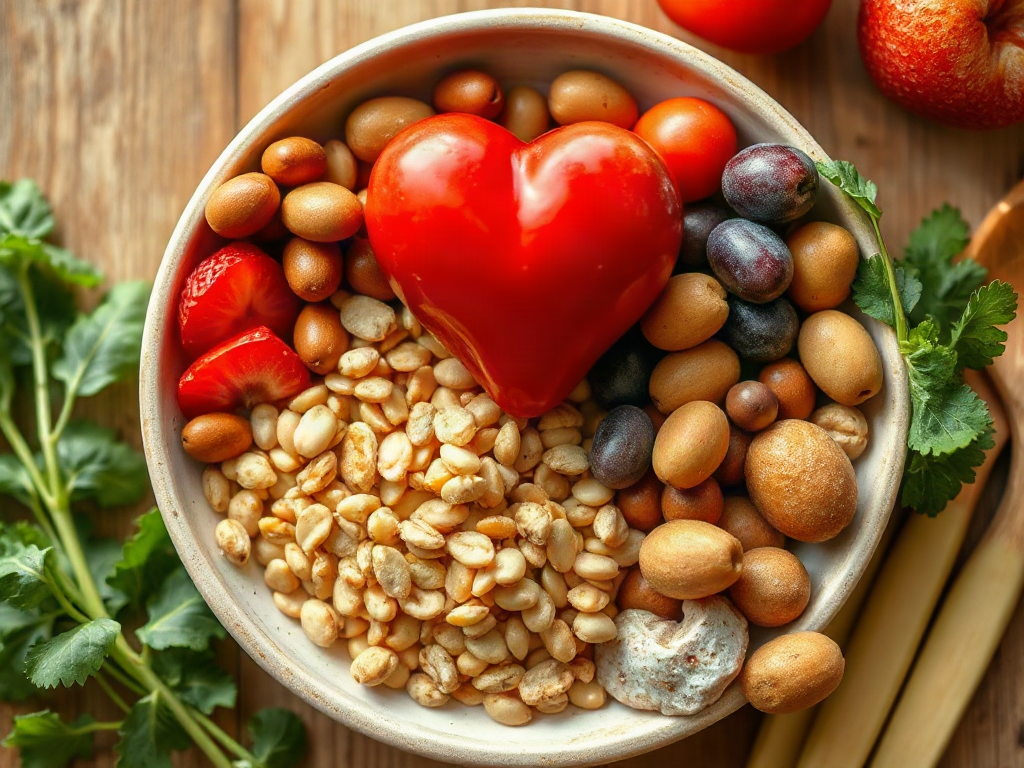
A practical heart-healthy daily plan emphasizes vegetables, fruit, whole grains, beans, nuts, seeds, fish, and unsaturated oils while limiting excess sodium, added sugar, and highly processed meats. Build most meals around fiber-rich plants, then add a modest protein source and a small amount of unsaturated fat. Oats, lentils, leafy greens, berries, walnuts, olive oil, and salmon contribute soluble fiber, minerals, or beneficial fats associated with cardiovascular health. Portion size and preparation still matter: fried fish, heavily salted beans, and sugar-coated oatmeal can undermine otherwise sound choices. Consistency across ordinary meals is more useful than relying on a single “superfood.”
What Belongs in a Heart-Healthy Eating Pattern
Cardiovascular nutrition is shaped by the pattern of food eaten repeatedly, not by an occasional serving of berries or salmon. The most useful pattern supplies ample dietary fiber, replaces much of the saturated fat with unsaturated fat, keeps sodium within an appropriate range, and leaves limited room for refined carbohydrates and heavily processed products. That combination may support healthier cholesterol and blood-pressure profiles while making meals filling enough to repeat.
Vegetables, fruit, beans, lentils, intact or minimally processed whole grains, nuts, and seeds form the plant-rich base. Their fiber affects the meal in several ways: it slows digestion, increases fullness, and, in the case of soluble fiber found in oats, barley, beans, apples, and citrus, can contribute to lower LDL cholesterol as part of an appropriate diet. Potassium-rich produce and legumes can also help balance a high-sodium eating pattern, although people with kidney disease may need individualized potassium guidance.
Protein choices change the fat and sodium profile of the plate. Fish, skinless poultry, tofu, tempeh, lentils, and beans generally fit more easily than bacon, sausage, fatty cuts of meat, or breaded frozen entrees. Fatty fish such as salmon, sardines, and trout provide omega-3 fats, but fish is not a requirement for a sound plan. A plant-based meal of lentils, brown rice, spinach, and walnuts can supply protein, fiber, minerals, and unsaturated fat without imitating a meat-centered plate.
Olive, canola, and other unsaturated oils are useful replacements for butter, shortening, or coconut oil; they are not unlimited additions. Pouring several tablespoons of oil over an already substantial meal can make energy intake climb quickly. The practical comparison is replacement rather than supplementation: sauté vegetables in olive oil instead of butter, or use mashed avocado in place of a creamy spread.
Use Heart-healthy foods for a practical daily plan as a pattern-building reference rather than a list of foods that must all appear every day. A plan is working when plant foods occupy more of the plate, processed meat becomes occasional, and meals remain satisfying between eating times. If hunger is constant, the plan may be too low in protein, fiber, total food, or all three.
How to Build Breakfast, Lunch, and Dinner
A repeatable meal structure is more practical than a rigid menu. At lunch and dinner, give vegetables the most visual space, include a fiber-rich carbohydrate, add a useful protein source, and finish with a measured amount of unsaturated fat. The components can be combined in a bowl, soup, sandwich, pasta dish, or traditional plated meal; they do not need to look like a formal “healthy plate.”
Breakfast benefits from the same logic. Plain oatmeal cooked with milk or fortified soy beverage, topped with berries and walnuts, combines soluble fiber, protein, and unsaturated fat. By comparison, a sweet pastry and flavored coffee may provide substantial refined carbohydrate without enough fiber or protein to sustain fullness. Savory breakfasts also work: whole-grain toast with avocado, tomato, and an egg is a practical option, particularly for someone who dislikes cereal.
Lunch often fails when convenience is treated as an all-or-nothing choice. A canned lentil soup can be paired with a salad and fruit, but sodium should be checked because soups vary widely. A whole-grain wrap filled with hummus, leftover chicken, cucumber, cabbage, and tomato is another fast option. If only white bread is available, the meal is not ruined; adding beans, vegetables, fruit, or nuts elsewhere matters more than pursuing perfection in every component.
Dinner can follow four compact priorities:
- Choose the plant base: vegetables, beans, or both.
- Add protein: fish, tofu, lentils, poultry, eggs, or another minimally processed option.
- Select a high-fiber starch: barley, brown rice, whole-grain pasta, corn, potatoes with skin, or whole-grain bread.
- Season deliberately: use herbs, spices, citrus, vinegar, garlic, or measured salty ingredients rather than salting automatically.
Seasoning is a frequent sticking point. “Low sodium” does not have to mean bland, but abruptly removing every salty flavor may make a new plan difficult to maintain. Use one concentrated source, such as a small amount of feta or soy sauce, then build the rest of the flavor with acid, aromatics, and spices. People taking medicines or managing heart failure, high blood pressure, or kidney disease should follow their clinician’s sodium and fluid instructions rather than adopting a generic target.
A One-Day Plan Using Ordinary Groceries
A useful daily plan should survive busy mornings, packed lunches, and limited cooking time. The following example uses familiar ingredients and can be adjusted for appetite, culture, budget, allergies, and medical needs. Portions are intentionally not prescribed because energy needs differ, and a portion that suits one adult may leave another underfed.
Breakfast and Morning Option
Prepare rolled oats with milk or an unsweetened fortified plant beverage. Add a sliced apple or frozen berries, cinnamon, and a spoonful of chopped walnuts. Frozen fruit is nutritionally useful and often costs less than fresh berries outside their season. If the meal does not keep you full, increase the oats or add plain yogurt, rather than trying to ignore hunger until lunch.
A snack is optional, not mandatory. When needed, choose an apple with peanut butter, plain yogurt with fruit, or carrots with hummus. Nuts and nut butter are nutrient-dense, so a modest serving is usually more practical than eating directly from a large container. A snack that repeatedly turns into a second meal may signal that breakfast or lunch is too small.
Lunch and Dinner
For lunch, fill a bowl with mixed greens or shredded cabbage, no-salt-added chickpeas, leftover cooked barley, tomatoes, and any other vegetables available. Dress it with olive oil, lemon, pepper, and herbs. Canned beans are convenient; draining and rinsing can remove some surface sodium. If fresh greens spoil before use, cabbage, frozen vegetables, or a shelf-stable bean-and-grain combination may be the more realistic purchase.
Dinner could be baked salmon with roasted broccoli and a skin-on potato, followed by fruit if desired. A lower-cost alternative is lentil and vegetable stew with whole-grain toast. The lentil dinner is not nutritionally inferior merely because it lacks fish; it supplies abundant fiber and replaces a potentially higher-saturated-fat entree. Someone who eats fish can alternate both meals during the week.
Water, sparkling water, unsweetened tea, and coffee without substantial added sugar are straightforward beverage choices. Juice can fit in a small amount, but whole fruit generally delivers more fiber and fullness. Alcohol should not be added for presumed heart benefits, and anyone advised to avoid it should continue to do so. This example illustrates how Heart-healthy foods for a practical daily plan can become ordinary meals rather than a specialized diet.
Shopping and Preparation Priorities
A heart-conscious grocery cart does not require premium labels or an entirely fresh inventory. Frozen vegetables without rich sauces, canned fish, low-sodium beans, plain oats, brown rice, whole-grain pasta, and unsalted nuts can reduce cost and food waste. Ingredient lists and nutrition labels are more informative than package claims such as “natural,” “multigrain,” or “made with whole grains.”

Compare similar products rather than judging a food in isolation. Two breads may both appear wholesome while differing substantially in fiber, sodium, and added sugar. Look for a whole grain near the beginning of the ingredient list and compare fiber and sodium per equivalent serving. For canned soup, sauce, beans, and prepared grains, select the lower-sodium option that remains affordable and enjoyable. A product does not need to be sodium-free to be the better choice.
Preparation determines whether good ingredients become practical meals. Cook a pot of barley, brown rice, or another grain and refrigerate or freeze meal-size portions. Roast a tray of vegetables while the grain cooks, and prepare a protein that can be reused safely in bowls, wraps, or salads. Alternatively, keep no-cook components available: canned beans, tuna or salmon, whole-grain bread, tomatoes, prewashed greens, and fruit can produce a meal in minutes.
The common mistake is buying an aspirational cart that does not match the week ahead. Delicate produce and unfamiliar grains offer little value if they are discarded. Choose two or three vegetables that fit actual cooking habits, one convenient protein, one whole grain, and fruit that stores well. Frozen spinach added to soup is more useful than fresh spinach forgotten in a drawer.
A compact shopping check can keep priorities visible:
- At least two forms of vegetables, including frozen or canned if useful
- Whole fruit for snacks or breakfast
- Beans, fish, tofu, poultry, eggs, or another practical protein
- One or two whole-grain staples
- Unsalted nuts or seeds and an unsaturated cooking oil
- Herbs, spices, citrus, or vinegar for lower-sodium flavor
Signs the system is working include fewer emergency takeout meals, produce being used before it spoils, and easy access to filling lunches. If preparation consumes an entire weekend or meals feel repetitive by midweek, reduce the batch size and keep more flexible pantry components.
Common Mistakes and When to Personalize the Plan
Healthy labels can hide tradeoffs that matter to the heart. Granola may contain whole grains yet also carry substantial added sugar and calories. Plant-based meat alternatives can reduce reliance on red meat but may be highly processed and salty. Coconut oil is plant-derived but rich in saturated fat. Evaluate the whole product and the role it plays rather than assuming a single ingredient settles the question.
Another mistake is adding beneficial foods without replacing less useful ones. Adding walnuts to a day that already exceeds energy needs differs from using walnuts instead of chips or a buttery snack. Similarly, eating salmon once a week will not offset a pattern dominated by processed meat, sugary drinks, and low-fiber convenience meals. Replacement changes the pattern; accumulation may only add more food.
Extreme restriction creates its own problems. Removing all dietary fat can make meals less satisfying and exclude nuts, seeds, fish, and unsaturated oils. Avoiding every packaged food can make the plan unworkable, especially for people with limited time, mobility, cooking facilities, or grocery access. Thoughtfully selected canned and frozen foods can be more dependable than fresh ingredients. The better comparison is minimally processed convenience versus heavily refined convenience, not packaged versus unpackaged.
Personalization becomes especially important with diagnosed cardiovascular disease, diabetes, chronic kidney disease, food allergies, digestive conditions, unintended weight change, or medicines that affect nutrients and fluids. Potassium-rich foods and salt substitutes, for example, may be inappropriate for some people with kidney impairment or those taking certain medications. Grapefruit can interact with some medicines. A registered dietitian or prescribing clinician can reconcile a heart-focused eating pattern with those constraints.
Track practical outcomes rather than expecting a dramatic sensation after a few meals. Useful signals include steadier hunger, more regular intake of vegetables and legumes, less dependence on processed meat, and a grocery routine that can be repeated. Blood pressure, lipids, glucose, and weight should be interpreted over time with appropriate professional care. If the plan produces persistent fatigue, excessive hunger, digestive distress, or unintended weight loss, reassess portions, food variety, and medical context instead of assuming stricter eating is better. A flexible Heart-healthy foods for a practical daily plan should support adequate nourishment as well as cardiovascular priorities.
Frequently Asked Questions
What are the most useful heart-healthy foods to keep at home?
Plain oats, beans, lentils, frozen vegetables, whole fruit, whole grains, unsalted nuts, canned fish, and olive or canola oil cover many meals without requiring daily shopping.
Can eggs fit into a heart-healthy daily plan?
Eggs can fit for many people when the broader diet is rich in plants and low in processed meat and excess saturated fat. Individual advice may differ for certain medical conditions.
Are canned foods acceptable for heart-conscious meals?
Yes. Choose no-salt-added or lower-sodium beans, vegetables, fish, and soups when available, compare labels, and drain or rinse canned beans when appropriate.
Do I need to eat salmon every day?
No. Fish can contribute omega-3 fats, but daily salmon is unnecessary. Beans, lentils, tofu, nuts, seeds, and other minimally processed proteins can support a varied pattern.
What should I change first if my current diet is highly processed?
Replace one repeated item: swap processed meat for beans or fish, a sugary drink for water, or a low-fiber breakfast for oats with fruit and nuts. Expand once the change feels routine.
Conclusion
Build the plan around replacements that can survive an ordinary week: beans instead of some processed meat, whole grains instead of refined staples, fruit instead of a sugary snack, and unsaturated oil instead of butter. Keep frozen and canned options available so limited time does not force an all-or-nothing choice. Flavor meals with herbs, spices, citrus, and measured salty ingredients, then adjust portions according to hunger and energy needs.
Begin with one breakfast, one lunch, and two dinners you can repeat without excessive cost or preparation. Review labels on the packaged foods you buy most often, especially bread, soup, sauces, and meat alternatives. Medical conditions and medications can change appropriate sodium, potassium, fluid, and food choices, so personalized clinical advice takes priority when those issues apply.
Related Content
- What’s the Difference Between Whole Food and Synthetic Supplements?
- What Are The Main Benefits Of A Whole Food Diet?
- Common Mistakes When Choosing Whole Food Superfoods: Key Factors and Practical Insights
- Why Whole Food Superfoods May Not Improve Energy Levels: Common Misconceptions and Nutritional Insights
- How Can I Incorporate Whole Food Nutrition Into My Diet?